Key takeaways
The US Supreme Court on Nov. 2 declined to force California to set aside mail ballots from about 20,000 voters the Trump administration says may not be citizens. The unsigned order, with no public dissent, leaves California’s counting rules in place as voters decide control of Congress on Nov. 3.
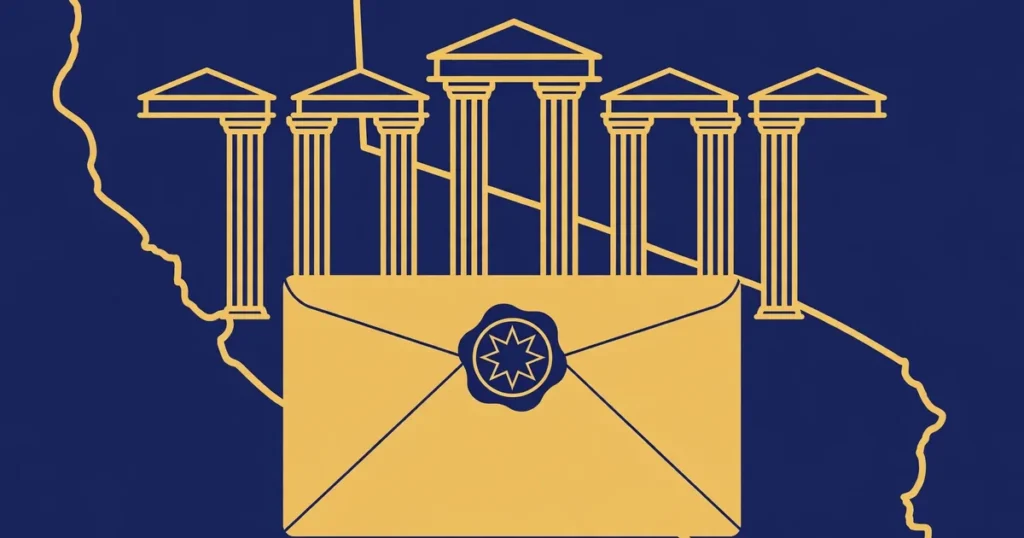
The United States Supreme Court on Monday, Nov. 2, rejected a last minute attempt by President Donald Trump’s administration to force California to separate the mail ballots of about 20,000 registered voters whom federal officials describe as likely noncitizens. The decision came one day before the US midterm elections, in which voters will decide control of Congress for the final two years of Trump’s second term.
The court acted within hours of receiving the administration’s emergency request. Its order was unsigned and gave no reasoning, which is normal for emergency applications, and no justice publicly recorded a dissent. The practical effect is straightforward: California does not have to create a separate system for the disputed ballots, and its existing counting procedures remain in place for Election Day, Tuesday, Nov. 3.
The ruling does not settle the underlying lawsuit. It only refuses emergency intervention while that case continues. That distinction matters, because the dispute over who is on the federal list, and how reliable it is, has not been decided on its full merits.
What the court was asked to do
The Justice Department asked the court to direct California to keep the challenged mail ballots apart from other ballots and not count them until the citizenship of the voters concerned could be verified. The administration argued that once disputed ballots are mixed with lawful ones, they cannot later be pulled out, so waiting would make any later ruling meaningless.
California opposed that request. State officials said the federal list appeared to contain errors, that the state already has safeguards against noncitizen voting, and that identifying and separating the ballots at this stage, after voting had been under way since early October, would be logistically impossible. California mails a ballot to each of its roughly 23 million registered voters, and hundreds of thousands of ballots had already been processed before the Supreme Court filing.
California Attorney General Rob Bonta welcomed the outcome as the state’s fourth court victory in the dispute, saying courts had now rejected the administration’s emergency efforts “not once, not twice, not three times, but four times”, from the district court to the appeals court to the Supreme Court.
How the case reached the court in three weeks
The dispute moved unusually fast. The Justice Department sued California on Oct. 15, arguing that the state was blocking enforcement of a 1996 federal law that makes it a crime for noncitizens to vote in federal elections. The list at the centre of the case was compiled by the Department of Homeland Security and sent to California and Los Angeles County officials.
On Oct. 28, US District Judge David Carter refused the administration’s request for an order blocking the ballots from being counted. Carter warned that the federal government had not shown a credible process for building its list, and wrote that never before had the federal government, on the eve of an election, sought to force a state to abandon its own constitutional election procedures.
A panel of the San Francisco based 9th US Circuit Court of Appeals upheld that refusal on Oct. 30, by a 2 to 1 vote. The majority said there was no feasible way to identify and separate the ballots of specific individuals without risking serious harm to the wider system, and that forcing California to use the list could block valid votes and jeopardise the Los Angeles County election. Circuit Judge Patrick Bumatay dissented, calling the government’s request reasonable and arguing that it would not cancel any vote but would allow time to check eligibility.
The administration then filed its emergency application with the Supreme Court on Nov. 2. The application was presented to Justice Elena Kagan, who handles emergency matters from California, and referred to the full court, which denied it the same day.
A separate ruling on Nov. 2 added to the administration’s setbacks in California election litigation. In Washington, Chief Judge James Boasberg found that the executive branch had likely violated the Constitution’s Elections Clause, which assigns authority over election rules to the states and Congress, in separate last minute demands made of California election officials.
The two arguments, in brief
The administration’s case rests on two claims: that federal law clearly bars noncitizen voting in federal elections, and that the only way to protect that law is to preserve the disputed ballots separately while eligibility is checked. Its filing warned that commingling the ballots would leave no remedy later. Federal prosecutor Bill Essayli, who leads the Justice Department’s Los Angeles office, has said he is highly confident the people on the list are not entitled to vote, while also conceding that the list may contain errors.
California’s case rests on the reliability of the list and the timing of the request. In a hearing before District Judge Trina Thompson over a separate order barring threats to prosecute election workers, a Justice Department lawyer agreed that there was a high error rate in the department’s data, saying that was why federal officials sought the registrars’ help in verifying voters. California officials have also argued that the state already verifies eligibility and that a late change to counting procedures would risk disenfranchising lawful voters.
Neither side’s account has been tested at a full trial. What the courts have decided so far is narrower: that the administration has not met the high bar for emergency relief that would change election procedures in the middle of voting.
Why it matters beyond California
California is the most populous US state and holds 52 seats in the House of Representatives, more than any other state. A dispute over 20,000 ballots there would not by itself decide control of Congress, but the legal principle at stake reaches further. The Constitution gives states and Congress, not the executive branch, the main responsibility for regulating federal elections, and the administration has sought a larger federal role in election administration during Trump’s second term.
The Supreme Court has not always ruled against the administration in such emergency cases. It has sided with the administration in a series of emergency appeals, but in September it rejected an earlier effort to restrict mail ballots nationally ahead of the midterms. Monday’s order fits that narrower pattern: the court declined to intervene in election mechanics on the eve of voting, without ruling on the broader claims about voter rolls.
For voters, the immediate message is simpler. California’s ballots will be counted under the rules that were in place when voting began, and the disputed ballots will not be held aside while eligibility is debated. For election officials elsewhere, the ruling is a signal that courts remain reluctant to rewrite counting procedures after voting has started, even when the request comes from the federal government.
What happens next
Three things will determine how this story develops. First, the underlying lawsuit continues in the lower courts, where the reliability of the federal list and the scope of federal authority over state voter rolls can be examined in full. An expedited hearing has been set in Los Angeles federal court for Nov. 13, according to local reporting of the case schedule.
Second, the midterm results themselves will arrive in stages. Polls close at different times across the country on Nov. 3, with California among the last, and close races can take days or weeks to call. The Supreme Court order removes one source of uncertainty from that count in California, but it does not guarantee a fast national result.
Third, the wider fight over voter rolls is unlikely to end with this order. The administration has warned election officials in all states that they could face prosecution if they knowingly allow noncitizens to vote, and California officials have said they will remain vigilant against further federal efforts to intervene. The emergency docket battle is over for this election; the policy argument over who checks voter eligibility, and how, is not.
Frequently asked questions
What did the Supreme Court decide on Nov. 2?
It denied the Justice Department’s emergency request to force California to set aside mail ballots from about 20,000 voters the administration says may not be citizens. The unsigned order gave no reasoning and recorded no public dissent, leaving California’s counting rules unchanged for Election Day.
Does this mean the disputed ballots will definitely be counted?
Under the current court orders, California will process ballots under its normal procedures rather than holding the disputed group aside. The underlying lawsuit has not been decided on its full merits, so the legal argument over the voter list itself continues in the lower courts.
Why did California say the request was impossible to meet?
State officials said voting had been under way since early October, ballots go to about 23 million registered voters, and hundreds of thousands had already been processed. They argued that finding and separating the challenged ballots at that stage could not be done reliably, and risked blocking lawful votes.
Sources
- Reuters via Nikkei Asia, “US Supreme Court rejects Trump, lets California count all ballots,” November 3, 2026: Nikkei Asia
- USA TODAY, “Supreme Court rejects Trump attempt to set aside some CA ballots,” November 2, 2026: USA TODAY
- The Hindu (AP), “U.S. Supreme Court rejects Trump administration push to set aside thousands of California ballots,” November 3, 2026: The Hindu
- Al Jazeera, “Supreme Court rejects Trump request to set aside California ballots,” November 2, 2026: Al Jazeera
- California Attorney General press release via EIN Presswire, “Attorney General Bonta Secures Fourth Legal Victory as U.S. Supreme Court Delivers Final Blow to Trump Administration’s Emergency Court Efforts,” November 2, 2026: EIN Presswire
- Bipartisan Policy Center, “The 2026 Midterms: Key Dates and Events”: Bipartisan Policy Center
- Democracy Docket, “DOJ demands ruling by Friday on emergency bid to stop California from counting ballots from alleged noncitizens,” October 2026 (Nov. 13 hearing schedule): Democracy Docket