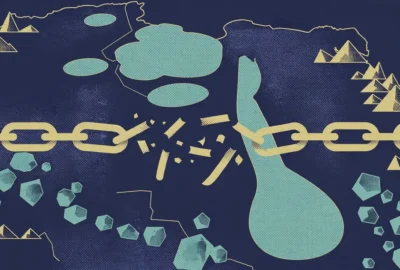
Key takeaways: The United Nations peacekeeping mission in Western Sahara has ended after 35 years, after the Security Council failed to renew its mandate. The mission entered a liquidation phase on 1 November, while UN diplomacy on the disputed territory continues.

The United Nations peacekeeping mission in Western Sahara has ceased operations after 35 years, following a deadlock in the Security Council over the future of the disputed territory. The mission, known as MINURSO, stopped operating when its mandate expired at the end of October, and 1 November marked the start of its liquidation phase.
MINURSO, the UN Mission for the Referendum in Western Sahara, was established in 1991 under Security Council Resolution 690. Its original task was to monitor a ceasefire between Morocco and the Frente POLISARIO and to prepare a referendum on the future of the territory. That referendum never took place, largely because the parties could not agree on who would be eligible to vote.
The end came after two rival drafts failed in the Security Council on 30 October. Russia vetoed a United States draft that had the support of 11 of the 15 Council members. A competing Russian draft, proposing a one year extension of the existing mandate, won only three votes in favour, with one against and 11 abstentions, falling short of the nine votes needed for adoption. With neither text adopted, the mandate expired without a renewal.
What the liquidation means
UN Secretary General Antonio Guterres confirmed the end of peacekeeping operations in a statement issued on 1 November. A smaller team reporting to the UN Department of Operational Support will now oversee the winding down of the mission, including the return of equipment belonging to troop contributing countries and the disposal of UN owned equipment.
At the time its mandate ended, the mission was headquartered in Laayoune, with nine team sites on either side of the berm, the sand barrier that divides the territory, and a liaison office in Tindouf. The mission had an authorised strength of 534 personnel, and 20 of its personnel lost their lives during its 35 years of service, according to the Associated Press.
Pakistan abstained on both Security Council drafts, a position its representatives linked to the need for a mutually acceptable political solution reached through dialogue and consensus among the parties.
Why it matters
The closure removes a long standing international presence from one of the world’s most protracted territorial disputes. The UN chief has warned of the risk of escalation now that the peacekeeping force is gone, and the end of the mission raises questions about how the ceasefire will be monitored and how the parties will be kept at the negotiating table.
Guterres said the end of peacekeeping operations did not end the UN’s diplomatic role, stating: “While MINURSO’s peacekeeping operations have concluded, the United Nations stands ready to continue supporting efforts to advance dialogue and pursue a peaceful resolution of the conflict.” The UN has said the mission’s end does not remove Western Sahara from the Security Council’s agenda, and does not change the right of its people to self determination.
What happens next
Diplomacy now carries the weight that peacekeeping once shared. The Secretary General’s Personal Envoy, Staffan de Mistura, will continue working toward a political solution, and the Security Council remains seized of the issue even without a force on the ground.
The immediate test will be stability along the berm and in the wider region. Without MINURSO’s team sites and patrols, any return to hostilities would be harder to verify. The longer test is political: whether the Council, which could not agree on even a one year extension, can find common ground on a settlement both Morocco and the Frente POLISARIO can accept.
Sources
- Associated Press, “UN’s peacekeeping mission in disputed Western Sahara ends after 35 years,” 2 November 2026: https://www.whro.org/2026-11-02/uns-peacekeeping-mission-in-disputed-western-sahara-ends-after-35-years
- Al Jazeera, “UN warns of security risks in Western Sahara as peacekeeping mission ends,” 1 November 2026: https://www.aljazeera.com/amp/news/2026/11/1/un-warns-of-security-risks-in-western-sahara-as-peacekeeping-mission-ends
- United Nations statement via UrduPoint (APP), “UN Mission In Western Sahara Winds Down After Security Council Fails To Extend Mandate,” 2 November 2026: https://www.urdupoint.com/en/world/un-peacekeeping-in-western-sahara-abruptly-en-2281716.html