Key takeaways: France has blamed Iran’s Revolutionary Guard for hacking refrigeration systems in about 700 supermarkets in October, spoiling food and starting fires. Paris has summoned Tehran’s ambassador, opened a criminal investigation and will seek EU sanctions.
France has formally accused Iran’s Islamic Revolutionary Guard Corps of a cyberattack that disabled refrigeration systems in hundreds of French supermarkets last month, in what Paris calls the first large-scale cyber sabotage on French soil.
Foreign Minister Jean-Noel Barrot announced the attribution on Monday, November 9, and said Iran’s ambassador had been summoned. The ambassador was received on Tuesday by the ministry’s secretary-general, and Barrot warned that France would seek European sanctions against those responsible. “I can confirm that this attack was carried out by the Islamic Revolutionary Guard Corps of the Islamic Republic of Iran,” Barrot said.
What happened in the stores
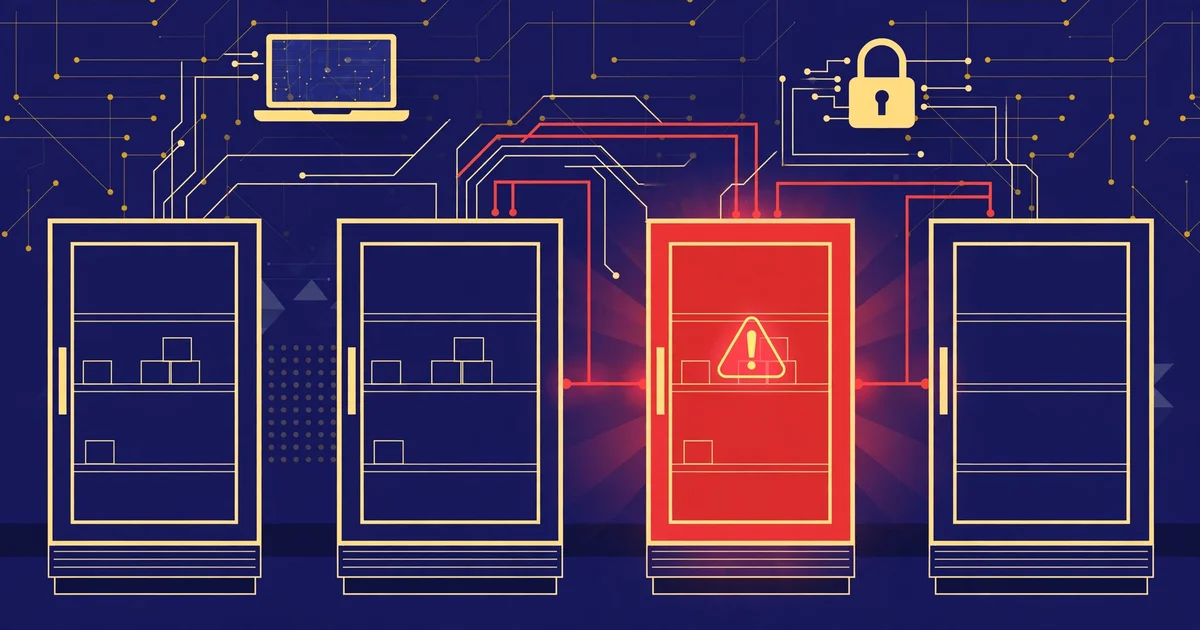
The attack struck overnight on October 11 and 12. According to Paris prosecutors, the attackers reached the supermarkets’ refrigeration systems through web interfaces, forced the units into abnormal, indefinite defrost cycles and switched off the alerts meant to warn staff when temperatures rose too high.
Temperatures inside the fridges and freezers climbed to 50 degrees Celsius (122 Fahrenheit) overnight. Large quantities of perishable food had to be thrown away, and fires broke out in at least 15 stores, according to France’s cybersecurity agency ANSSI.
About 700 sites were hit, of roughly 10,000 supermarkets in France, prosecutors said. Chains hit included E-Leclerc, Intermarche, Carrefour, Monoprix and Cooperative U.
How France traced the attack
ANSSI attributed the attack to a group it calls Shahid Kaveh, described as an offensive cyber unit affiliated with the Electronic and Cyber Centre of the Revolutionary Guard. Paris prosecutor Laure Beccuau said investigators found traces of Farsi, the Persian language, and internet addresses linked to devices located in Iran.
Beccuau opened a formal judicial investigation on Monday into suspected organised cybercrime committed to serve the interests of a foreign power, in this case Iran. Her office said it had requested international arrest warrants for the leader of Shahid Kaveh and his two deputies. Iran’s mission to the United Nations did not respond to requests for comment on Monday. Iran routinely denies carrying out malicious cyber operations.
What France plans to do next
Barrot said France would push for European sanctions and warned that Paris was ruling nothing out. He said on Tuesday that France would take every measure it deemed proportionate and necessary to deter further attacks, including ones it might not disclose publicly, according to Al Arabiya.
Reuters described the supermarket hacks as among the most disruptive cyberattacks since the war with Iran began in February 2026. On November 2, stores in at least nine other European countries were hit by a suspected freezer attack, although France has not officially linked that wave to Iran.
Why it matters
The attack shows how cyber conflict is reaching ordinary civilian life. Supermarkets are soft targets: their refrigeration systems are industrial equipment, often connected to the internet for remote monitoring, and a single intrusion can spoil food across hundreds of stores at once.
It also raises the stakes for Europe’s response. France is treating the incident as state-sponsored sabotage, not ordinary cybercrime, and is seeking a collective European answer. If the EU agrees to sanctions, it would be one of the first times the bloc has punished a state for a cyberattack on civilian infrastructure.
What happens next
The judicial investigation will now run its course, and the arrest warrant requests will test how far international law enforcement can reach a unit operating from inside Iran. In Brussels, France will press its European partners to agree sanctions, a process that usually takes weeks and requires unanimity.
Investigators will also examine whether the November 2 wave of freezer attacks across Europe is connected. Either way, the episode is a warning to retailers to secure the industrial systems behind their shelves.
Frequently asked questions
What did the hackers actually do to the supermarkets?
They took over the refrigeration controllers through web interfaces, forced the units into long defrost cycles and disabled the temperature alerts, so fridges and freezers warmed to 50 degrees Celsius overnight and food spoiled.
Who does France blame for the attack?
France’s cybersecurity agency ANSSI blames Shahid Kaveh, a cyber unit it says is affiliated with Iran’s Islamic Revolutionary Guard Corps. Paris prosecutors have opened a formal investigation and requested international arrest warrants for the unit’s leader and two deputies.
What happens next?
France will seek EU sanctions against those responsible, the criminal investigation continues, and Barrot has said France rules nothing out, including measures it may not disclose publicly.
Sources
- Reuters, “France summons Iran envoy over supermarket fridge hack, warns of response”, November 10, 2026: https://www.reuters.com/world/europe/france-summons-iran-envoy-over-supermarket-fridge-hack-warns-response-2026-11-10/
- Al Jazeera, “France accuses Iran of cyberattack on supermarket fridges”, November 9, 2026 (updated November 10): https://www.aljazeera.com/amp/news/2026/11/9/france-accuses-iran-of-cyberattack-on-european-fridges
- Associated Press via Korea Times, “France blames Iran for last month’s cyberattack on supermarket fridges”, November 10, 2026: https://www.koreatimes.co.kr/world/20261110/france-blames-iran-for-last-months-cyberattack-on-supermarket-fridges
- Al Arabiya, “France vows tough response to freezer cyberattack blamed on Iran”, November 10, 2026: https://english.alarabiya.net/News/world/2026/11/10/france-vows-tough-response-to-freezer-cyberattack-blamed-on-iran