Key takeaways: Pakistan reopened the Gabd-Rimdan crossing with Iran on Saturday after a week-long suspension. Trucks carrying LPG and essential food can move again, with only consignments noted on or before 16 October cleared at first.
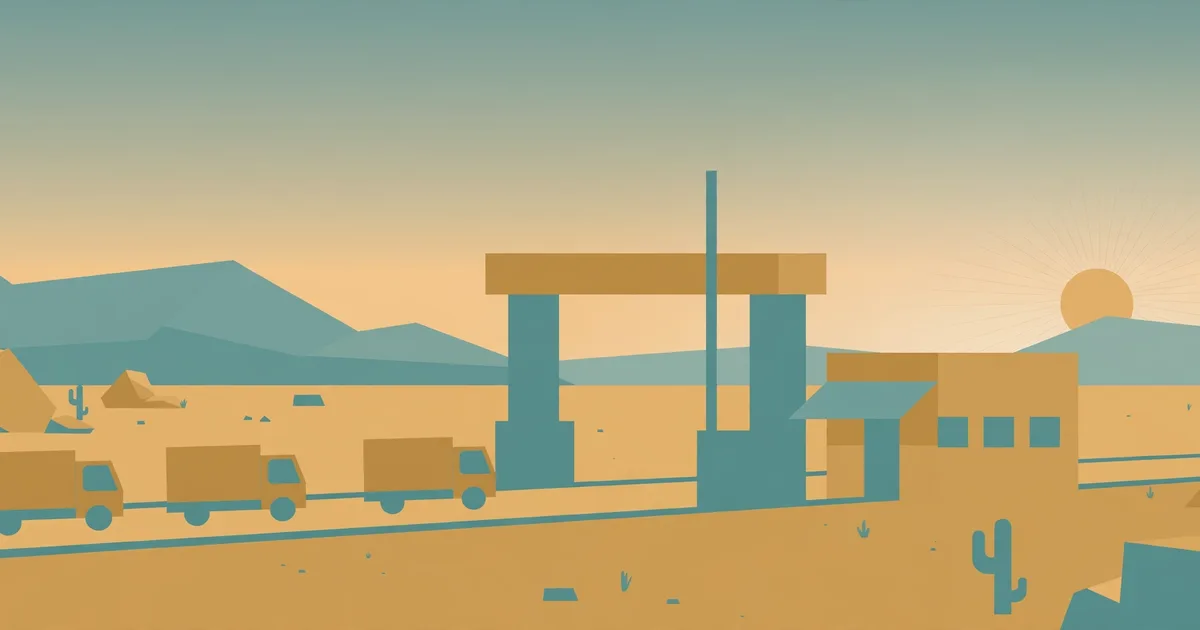
Pakistan has reopened its Gabd-Rimdan border crossing with Iran, restoring a trade route whose week-long closure had stranded freight vehicles and deepened concerns about cooking-gas supplies as winter approaches.
Trade resumed on Saturday morning at the crossing, known as Gate 250, in Balochistan’s Gwadar district. Border officials initially cleared commercial consignments holding a consignment note dated 16 October or earlier, allowing trucks carrying liquefied petroleum gas (LPG) and essential food items to cross in both directions.
Mir Naveed Jan Kalmati, president of the Gwadar Chamber of Commerce and Industry, confirmed the resumption and said: “Pakistan has opened the border with Iran at Gabd-Rimdan this morning and allowed trucks and other vehicles to move toward Iran and Pakistan with import and export goods.”
The closure began on 17 October, when the Ministry of Commerce suspended trade at the Gabd-Rimdan and Taftan crossings. The ministry’s memorandum withdrew a trade order dated 3 October with immediate effect and gave no reason for the halt, though the suspension was widely believed to be linked to security concerns.
The standstill left a backlog of vehicles parked near the closed crossing. On Thursday, unidentified gunmen attacked the stranded freight vehicles, setting dozens of trucks ablaze and damaging several others. Local administrators reviewed the security situation before Saturday’s reopening and deployed additional forces to protect trade convoys.
For traders and transporters on both sides of the border, the reopening brings immediate relief after days in limbo. The chamber expects the restored supply chain to ease a nationwide LPG shortage and to put downward pressure on soaring energy and food prices, though that will depend on how quickly volumes return to normal and whether clearance widens beyond the consignments initially approved.
The timing matters. Demand for LPG rises as winter sets in, and households that rely on bottled gas are among the first to feel a supply squeeze. Gwadar’s traders have argued throughout the closure that the border is not only a trade route but a lifeline for everyday supplies in the surrounding region.
The reopening also comes days after Field Marshal Asim Munir’s visit to Iran earlier in the week, during which he held talks with the Iranian leadership on bilateral relations and regional issues, according to reports of the visit.
What happens next will be watched on three fronts: whether the Taftan crossing, also covered by the 17 October suspension, follows Gabd-Rimdan back into operation; whether officials extend clearance to consignments dated after 16 October; and whether the renewed flow is enough to stabilise LPG availability and prices in the weeks ahead. For now, the gate that stood closed for a week is open again, and the trucks that waited beside it are moving.