Key takeaways: Pakistan’s loss-making state firms lost Rs342.8 billion in six months while government support hit a record Rs804 billion. The privatisation adviser says the state should regulate markets, not run businesses.
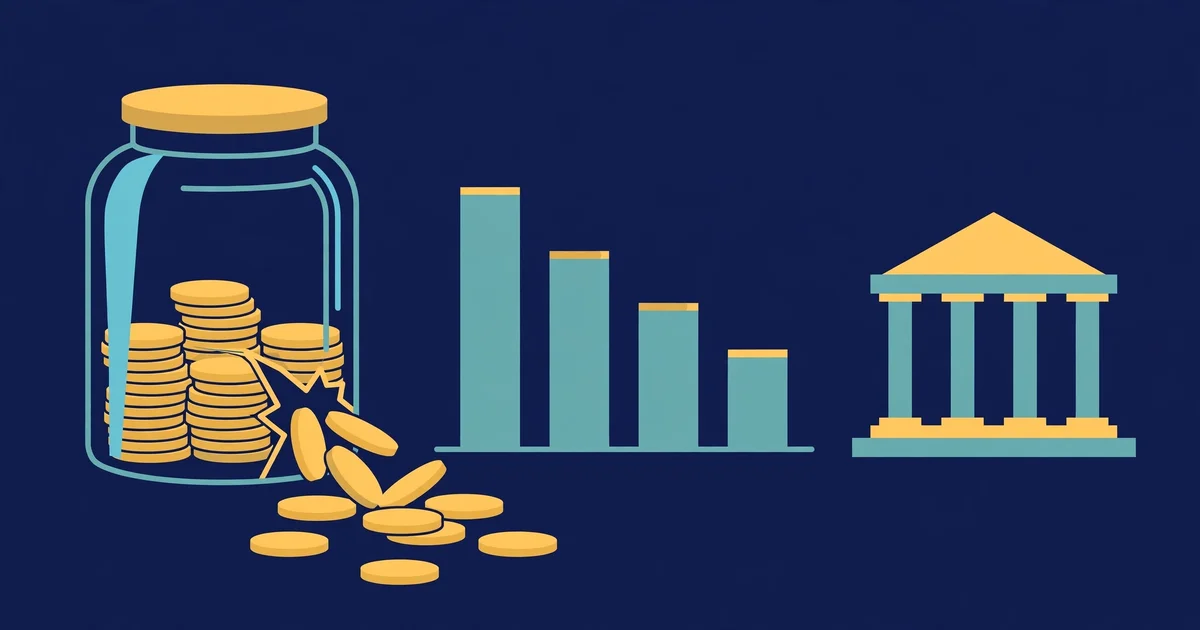
Pakistan’s loss-making state-owned enterprises lost Rs342.8 billion in the first half of fiscal year 2025-26, while government support for the sector climbed 31 percent to a record Rs804 billion. The figures were cited by Muhammad Ali, adviser to the prime minister on privatisation, at the sixth Pakistan Prosperity Forum in Islamabad on Thursday, November 19.
The numbers come from the Finance Ministry’s SOEs Monitoring Report for July to December 2025. Twenty-three loss-making enterprises accounted for the full Rs342.8 billion in losses. The National Highway Authority was the biggest single loss-maker at Rs124.5 billion, followed by Quetta Electric Supply Company at Rs35.3 billion and Sukkur Electric Supply Company at Rs34.9 billion. Pakistan Railways lost Rs29.4 billion.
Profitable state firms earned Rs423.3 billion over the same period, leaving a net adjusted profit of Rs80.5 billion across the portfolio, down 30 percent from Rs114.3 billion a year earlier. State firms paid about Rs839 billion to the government in taxes, dividends and other contributions, against the Rs804 billion they received in support. The resulting net fiscal flow of Rs35 billion was 91 percent lower than the Rs427 billion recorded in the same period last year.
The ministry’s report puts the daily cost in plain terms: loss-making firms lose about Rs2.8 billion a day, while government support runs at nearly Rs6.6 billion a day. Accumulated losses of the 23 loss-making firms now stand at Rs6.523 trillion, and the wider state-enterprise portfolio carries debts of more than Rs10 trillion, including about Rs2.5 trillion in foreign-currency liabilities.
Why it matters
The figures show how much of the public purse still goes to keeping state firms running. Support of Rs804 billion in six months is roughly 11 percent of total federal budgetary receipts over the period, money the government says could otherwise go to education, healthcare and public welfare.
Ali argued the state’s job is to set policy and regulate markets, not to run commercial enterprises. “An economy’s greatest asset is investors’ confidence in the future,” he said, adding that taxpayers could not keep bearing the burden of commercial risks through repeated bailouts.
The losses are concentrated in power and infrastructure. Distribution companies dominate the loss list, and the power sector’s circular debt stock has reached about Rs3.3 trillion, despite restructuring efforts and partial warehousing of liabilities through financing arrangements.
What happens next
The government is pressing ahead with privatisation. Ali said the sale of Pakistan International Airlines had generated Rs80 billion in fresh equity for the airline and Rs10 billion for the government, with a further Rs90 billion expected from the next phase of the airline’s privatisation in June 2027. First Women Bank has also been privatised, bringing an international investor into the market.
The privatisation of three power distribution companies, Islamabad Electric Supply Company, Gujranwala Electric Power Company and Faisalabad Electric Supply Company, has entered a critical due diligence stage. Ali also cited the Hyderabad-Sukkur M-6 Motorway project, where investment of $672 million is expected under a public-private partnership.
Elsewhere in the portfolio, the Utility Stores Corporation has been closed and the winding-up of the Pakistan Agricultural Storage and Services Corporation is under way. The government says it will rationalise the state-enterprise footprint through closure, restructuring and privatisation, based on each entity’s commercial viability and strategic rationale.
The test will be whether the sales pipeline moves fast enough to cut the daily drain. For now, the losses continue at about Rs2.8 billion a day.
Frequently asked questions
How much did Pakistan’s state-owned enterprises lose?
Loss-making state firms lost Rs342.8 billion in the first half of fiscal year 2025-26, from July to December 2025, according to the Finance Ministry’s SOEs Monitoring Report.
How much government support did they receive?
Government financial support rose 31 percent to a record Rs804 billion in the same six months, while the firms paid about Rs839 billion back to the government, leaving a net fiscal flow of Rs35 billion.
Which state firms lost the most?
The National Highway Authority lost Rs124.5 billion, followed by Quetta Electric Supply Company at Rs35.3 billion, Sukkur Electric Supply Company at Rs34.9 billion and Pakistan Railways at Rs29.4 billion.
Sources
- The News, “SOEs lose Rs343bn in six months”, November 20, 2026: https://www.thenews.pk/print/1449799-soes-lose-rs343bn-in-six-months
- Dawn, “Power sector losses drag state-owned entities’ profits”, October 6, 2026: https://www.dawn.com/news/2035050/power-sector-losses-drag-state-owned-entities-profits
- Radio Pakistan, “SOEs generate Rs35bn positive net fiscal flow for Govt: Khurram”, September 15, 2026: https://radio.gov.pk/15-09-2026/reforms-in-soes-moving-beyond-identifying-problems-to-stronger-oversight-khurram
- Minute Mirror, “SOEs’ fiscal contribution plunges 91%”, October 22, 2026: https://minutemirror.com.pk/soes-fiscal-contribution-plunges-91-630290/