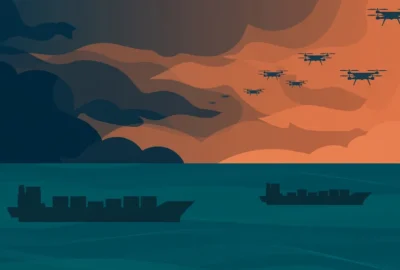
Ukraine carried out one of the largest drone attacks of the four-and-a-half-year war overnight between Saturday and Sunday, sending more than a thousand drones across Russian territory and setting oil facilities in St. Petersburg ablaze. The barrage landed as the relationship between Kyiv and Washington hit its lowest public point of the conflict — with US President Donald Trump openly accusing Volodymyr Zelensky of standing in the way of peace.
Russia’s Defence Ministry claimed its air defences destroyed 1,015 Ukrainian drones across 15 regions, Crimea and the Black Sea — the largest single-night count Moscow has ever reported, according to CNN. It ranks among Kyiv’s biggest aerial assaults on Russian soil since the 2022 full-scale invasion.
KEY TAKEAWAYS: Ukraine launched a record 1,015-drone barrage across Russia overnight Oct 17–18, striking St. Petersburg oil sites and killing one person. Trump accused Zelensky of not wanting to end the war; Putin reportedly proposed a Trump–Putin–Xi summit in November.

St. Petersburg oil sites burn
In Russia’s second-largest city, Governor Alexander Beglov said drones struck the Petersburg Oil Terminal and the Ruchi oil depot, sparking fires that required a large emergency response. One person was killed and five others were wounded, residential buildings were damaged, and the city’s main airport temporarily restricted flights.
Other commercial targets were also hit. A logistics centre belonging to Russian retailer Ozon and a data centre operated by technology company VK were struck — both companies confirmed their facilities had been targeted, according to the Associated Press. Two electrical substations in Yanino were damaged as well, cutting power to roughly 20,000 residents in the Leningrad region.
The strikes came barely a week after Trump announced what he called an “energy ceasefire” on October 11 — one neither government formally confirmed, Reuters reported. Ukraine paused its attacks on Russian oil facilities for three days, then resumed them, saying Moscow had continued bombarding Ukrainian power stations in the meantime.
Trump and Zelensky trade blows
In a Truth Social post on Sunday, Trump said Zelensky “doesn’t want to end this war, and probably never did.” The US president said he was negotiating peace and did not want to push Russia away from the bargaining table, insisting that “great progress” was being made. Trump has criticised Ukrainian strikes on Russian oil infrastructure and defended delaying new sanctions on Moscow, arguing the penalties could undermine negotiations.
Zelensky pushed back on NBC’s Meet the Press, warning that Washington siding with Russia would be a “historic mistake.” He said Russian forces had attacked Ukrainian energy, oil and gas infrastructure 76 times in the past week, and Ukrainian authorities reported 11 deaths and nearly 50 injuries from Russian strikes over 24 hours. He also confirmed US intelligence-sharing had resumed after a temporary interruption and said he had spoken with US envoys Steve Witkoff and Jared Kushner about further diplomatic steps.
Why it matters
The open rift between Washington and Kyiv is now one of the war’s central political variables. Ukraine’s strikes on Russian refineries and export terminals are its main lever against Moscow’s war economy; Trump’s push to halt them — alongside his waiver of the Graham Act sanctions package on Russia’s oil and gas sector — shifts pressure onto Kyiv, with the US midterms barely two weeks away. Energy has become the main battlefield on both sides.
What’s next
The Wall Street Journal reported via Reuters that Putin has proposed a trilateral summit with Trump and China’s Xi Jinping on the sidelines of the APEC meeting in Shenzhen on November 18–19. Kremlin spokesman Dmitry Peskov confirmed talks are underway; a senior US official said Trump has not agreed but could be receptive.
For now, all eyes are on whether the supposed energy ceasefire holds through the week — and how Washington responds if Ukrainian drones keep flying toward Russian refineries.
Sources: The News International; The Trent (Reuters/AP reporting); Zark News; Anadolu Agency