Key takeaways
JD Vance has written to Iran’s security chief Mohsen Rezaei to test whether a framework for talks exists. Donald Trump has given conflicting accounts of the contact. With the November 3 midterms near and new strikes under consideration, it is a last diplomatic opening — but Tehran says core demands must be met first.
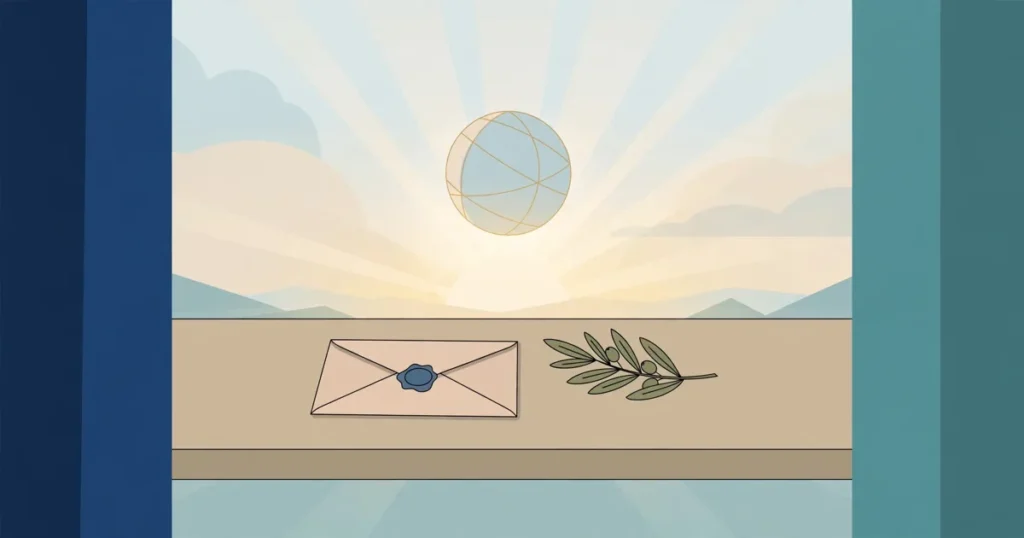
United States Vice President JD Vance has written directly to one of Iran’s most powerful hard-liners in an attempt to reopen peace negotiations, even as President Donald Trump weighs a fresh military campaign against Iran after next week’s midterm elections.
The Wall Street Journal first reported the letter on Wednesday. According to the report, Vance wrote to Mohsen Rezaei, secretary of Iran’s Supreme National Security Council, to test whether Washington and Tehran could agree on a framework for negotiations. The exchanges so far have not produced a detailed peace proposal, the report said, and have instead focused on whether talks themselves are possible.
The letter and its recipient
Rezaei is not a marginal figure in Tehran. He is secretary of the country’s top security body and formerly the longest-serving commander of the Islamic Revolutionary Guard Corps. He is a veteran of the 1980s Iran–Iraq War, and his influence has grown as hard-liners have gained ground in Tehran since the United States and Israel killed senior Iranian leaders at the start of the war in February.
That is part of the calculation behind the outreach, according to US officials cited by the Journal. Some in Washington believe that engaging the hard-liners who now hold real power in Tehran may produce a better result than negotiating only with officials who cannot deliver an agreement.
Vance himself has a history with this file. Before the war began in February, he pushed for a stronger diplomatic effort, and Trump later named him lead negotiator. He has travelled abroad twice to meet Iranian representatives in search of a deal, according to reporting on the outreach. An interim agreement reached in June collapsed within two weeks, after a dispute over restoring shipping through the Strait of Hormuz. Later efforts brokered by Qatar and Pakistan also failed to produce a breakthrough.
Two accounts from Washington
What exactly Vance’s letter was — and who ordered it — is already contested, and the contradiction is itself part of the story.
The Journal reported, citing a person familiar with the matter, that the letter was sent at Trump’s direction and that the president was fully aware of the initiative. Speaking to reporters on Wednesday evening, Trump said he had approved Vance’s request to make contact.
But Trump separately denied that he had directed Vance to open peace negotiations, saying the vice president’s contact concerned medical supplies. “Iran needs help with medical supplies. Basically, it’s getting supplies in to help people that are not well,” he told reporters at Joint Base Andrews when asked whether he had ordered Vance to begin peace talks.
Readers should therefore treat the purpose of the letter as reported, not confirmed: the Journal’s account, based on unnamed officials, describes a diplomatic test; the president’s own public words describe a humanitarian contact. Both cannot be the full story, and neither side has published the letter itself.
Why now: the midterms and the strike threat
The timing is driven by the calendar. The United States holds midterm elections on November 3, and Trump has repeatedly hinted that a decision on renewed strikes could follow them. The Journal reported that Washington has told several Gulf Arab states to prepare for a possible “short, intense military campaign” against Iran after the elections, though Trump has not made a final decision.
Last week, Trump said Washington was not negotiating with Tehran and warned that events would come to a head soon. On the campaign trail on Tuesday, he accused Iran of stalling, and suggested that waiting for the election result would gain Tehran nothing.
The stakes at home are real for both men. The war, and the fuel prices that have followed it, are weighing on voters ahead of an election that will decide control of Congress. Vance, widely seen as a possible contender for the 2028 Republican presidential nomination, has publicly backed the military campaign while privately expressing reservations about continuing it — a tension this letter brings into the open.
Tehran’s position and the Qatar track
Tehran has not welcomed the outreach on Washington’s terms. Rezaei said last week that Iran would not negotiate with Washington until its core demands were met. Iranian officials have consistently said those conditions include an end to the US naval blockade of Iranian ports and the lifting of sanctions on Iranian oil exports, before nuclear concessions are discussed. Washington, by contrast, wants Iran’s nuclear programme addressed from the outset.
A parallel mediation track underlines how far apart the sides remain. Qatari mediators presented Iran with a new draft deal on Sunday, according to an official briefed on the negotiations, with a response expected by the end of the week. The draft sets out a seven-day timeline of daily confidence-building steps for each side, with several countries acting as guarantors. But a senior Iranian official involved in the talks said Doha had offered only “unacceptable ideas and not an offer”, and that Tehran’s position of no flexibility on the nuclear issue was unchanged.
Foreign Minister Abbas Araghchi said on Wednesday that Iran remained in close contact with intermediaries about its own seven-day proposal, which he said could be implemented in less than a week and would reopen the Strait of Hormuz. He also warned that any renewed attack in the Gulf could have a devastating effect on international markets, for energy producers and consumers alike. “While our Brave Armed Forces are fully prepared to defend the Homeland, Iran continues to give diplomacy a chance to succeed,” he wrote on X.
That waterway is the heart of the dispute. Iran restricted shipping through the Strait of Hormuz, through which about a fifth of the world’s oil and liquefied natural gas used to travel, after the war began. The United States has maintained a naval blockade of Iranian ports in response. On Monday, senior officials from Saudi Arabia, Turkey and Pakistan met Iranian officials in Tehran as part of de-escalation efforts, and Qatar said on Tuesday that Iran needed to stop threats against Gulf Arab states and reopen the strait to show good faith.
Why it matters
If the Vance letter leads nowhere, the default in Washington appears to be escalation. A short, intense campaign after the midterms would risk widening a war that has already disrupted global shipping and energy supplies and spread to Saudi Arabia and Yemen, where Houthi forces have repeatedly attacked Saudi targets.
If it leads somewhere, it would still face the same obstacle that sank the June agreement: the two sides disagree on the order of concessions. Tehran wants sanctions relief and an end to the blockade first; Washington wants nuclear commitments first. A framework for talks does not resolve that sequence — it only creates a room in which it can be argued.
For the region, the distinction matters. Gulf states have been told to prepare for strikes, yet they are also the countries most exposed to retaliation. Iranian officials have warned that a fresh attack could trigger wider retaliation, including against infrastructure in the Gulf. The letter, whatever its purpose, is the clearest sign yet that at least part of the US administration wants to test whether that outcome can still be avoided.
What’s next
Three things will show whether this opening is real. First, whether Tehran responds to the Qatari draft by the end of the week, and in what terms. Second, whether Vance’s channel to Rezaei produces a second round of contact, or goes quiet. Third, what Trump decides after November 3 — and whether his public framing of the letter as a medical-supplies contact hardens into the administration’s official line.
Until then, the honest summary is narrow: a letter has been sent, its purpose is disputed, no peace proposal exists, and a decision on war or diplomacy is now weeks away at most.
Sources
- The Wall Street Journal: Vance Reaches Out to Iranian Hard-Liner in Bid to Restart Peace Talks
- Mathrubhumi English (ANI): JD Vance Reaches Out to Iran’s Mohsen Rezaei for Peace Talks
- India TV News: JD Vance writes to Iran security chief in last minute push to revive truce talks ahead of US midterms
- The Times of India: Vance sends letter to Iran hard-liner in bid to revive peace talks as Trump threatens strikes
- Reuters via BusinessWorld: Iran sees only unacceptable ideas in latest mediation to end war, official says