Key takeaways
- The Punjab Home Department has imposed Section 144 across the province, effective until October 15, 2026, after intelligence agencies warned of terrorist attacks on public gatherings.
- Gatherings of five or more people in public places are banned, along with rallies, processions, sit-ins and demonstrations; carrying or displaying weapons in public is also prohibited.
- Weddings, funerals, routine religious gatherings, courts, government institutions and events with official permission are exempt.
- The order comes as political parties plan street mobilization, making it both a security measure and a flashpoint in an already charged atmosphere.
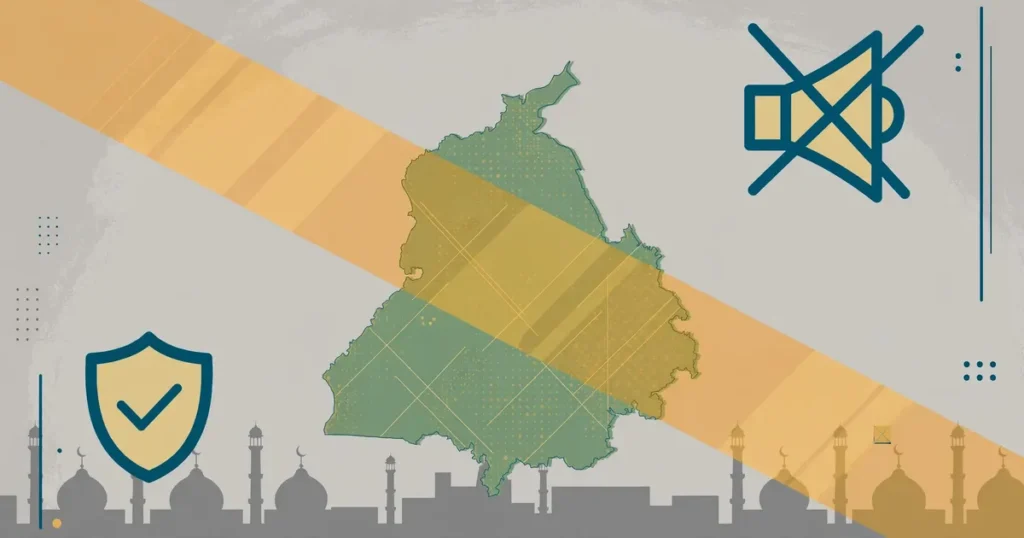
LAHORE — Punjab, Pakistan’s most populous province, has been placed under sweeping emergency restrictions this week. The Punjab Home Department on Tuesday imposed Section 144 across the entire province, banning public gatherings of five or more people, political rallies, processions, sit-ins and demonstrations, citing credible intelligence that terrorist organizations are planning attacks on crowds.
The order, issued under Section 144(6) of the Code of Criminal Procedure, 1898, will remain in force until October 15, according to the notification released by the Home Department. It also prohibits the carrying or public display of all types of weapons, and warns that encouraging or inciting people to take part in unlawful gatherings will invite legal action.
The Home Department said law-enforcement and intelligence agencies had received “immediate threat” reports suggesting public gatherings could become easy targets for terrorist attacks. The department added that the protection of the lives and property of citizens remains the government’s top priority.
What is banned — and what is not
The restrictions are broad but not absolute. Under the notification: gatherings of five or more people at public places, roads, highways and open spaces are prohibited. Political rallies, processions, public meetings, sit-ins and demonstrations are banned across the province. Carrying or displaying weapons in public places is banned, as is encouraging or inviting people to join unlawful gatherings.
Exemptions include wedding ceremonies, funeral prayers and burials, routine gatherings at mosques, imambargahs and other places of worship, courts, government offices and institutions, and any event held with formal administrative permission. Law-enforcement agencies, intelligence personnel and security staff deployed on duty are also exempt.
In practice, that means daily life — shops, offices, schools, mosques — continues normally, but any organized public assembly requires official clearance.
Why now: the threat picture
The Home Department’s notification points to intelligence received from law-enforcement and intelligence agencies indicating that terrorist organizations may be targeting crowded places. A similar five-day imposition in September cited “serious and imminent” threats involving suicide bombers, vehicle-borne improvised explosive devices (VBIEDs) and targeted killings during large public gatherings.
Security operations elsewhere in the country underline the alert. Security forces carried out an intelligence-based operation in North Waziristan earlier this week that left five militants dead and two wounded, with both the president and the prime minister publicly praising the raid — a signal of how seriously the current threat environment is being treated at the top.
The order comes from the Punjab Home Secretary directly, and the province’s home department has framed it as a preventive measure requested by law-enforcement agencies seeking “immediate preventive security measures.”
The political backdrop
The timing is difficult to separate from Punjab’s political temperature. Jamaat-e-Islami’s (JI) countrywide protest campaign against the petroleum levy and inflation has been running for weeks, and the Pakistan Tehreek-e-Insaf (PTI) has announced its support for JI’s ongoing sit-ins — a rare alignment between the two opposition forces.
At the same time, Khyber-Pakhtunkhwa Chief Minister Sohail Afridi has planned tours across Punjab cities as part of a mobilization drive, and the coalition government faces renewed pressure from coalition partners PPP and PML-N, whose recent dialogue made “little headway” after an 18-month hiatus.
That combination — an announced opposition mobilization and a government warning of terror threats at gatherings — puts the province on edge. Governments routinely impose Section 144 ahead of planned protests; opposition parties routinely call it a political tool dressed up as security. The Home Department’s notification anticipates that criticism by leaning on the intelligence reports as its stated basis.
What happens next
The restrictions run through October 15. Two things will decide whether they are extended or allowed to lapse:
- The security assessment. If intelligence agencies continue to flag imminent threats, the Home Department can renew the order — as it has done before.
- The political calendar. JI’s protest campaign and PTI’s planned Punjab mobilization will test whether the ban holds, is challenged in court, or sparks confrontations on the ground.
For ordinary residents, the immediate takeaway is simpler: avoid joining or organizing unauthorized gatherings, and expect a visible law-enforcement presence at public events for the next week.
Related: PTI’s mobilization · political talks · economic pressures
Sources
- Daily Qudrat English, “Section 144 Imposed Across Punjab, Ban on Gatherings of Five or More, Rallies and Protests”
- 24NewsHD, “Punjab govt extends Section 144 across province” (Oct 6, 2026)
- UrduPoint, “Section 144 Imposed Across Punjab From Today Until October 15” (Oct 6, 2026)
- The Express Tribune, “Punjab imposes Section 144 for five days, citing ‘terror threat'” (Sep 13, 2026)