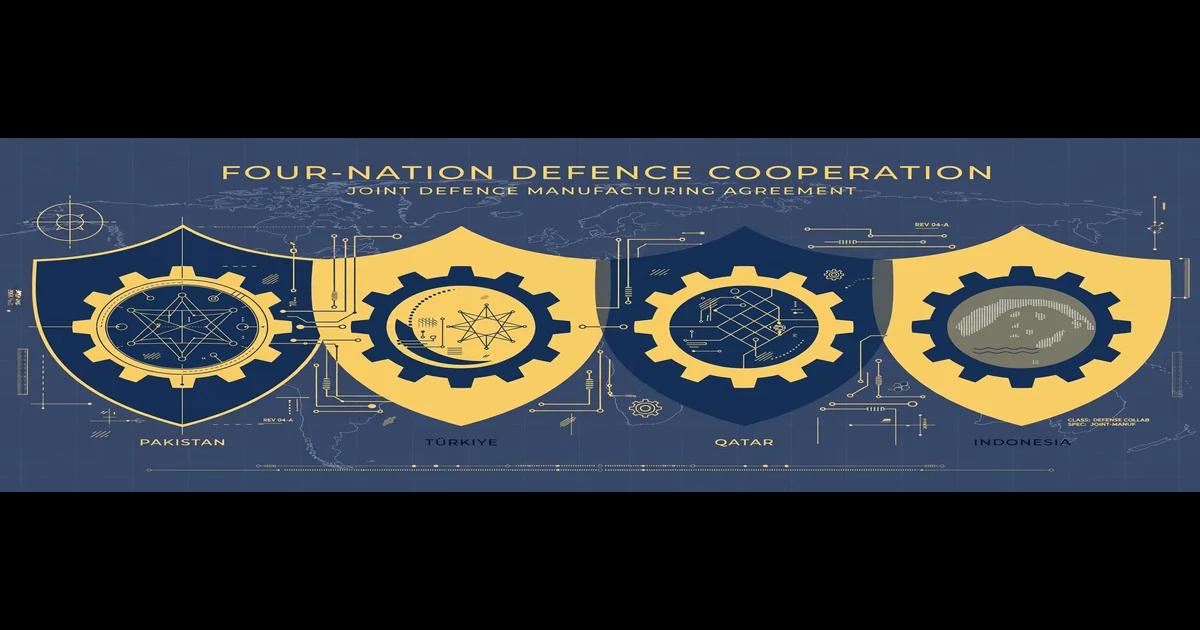
Pakistan joined Turkiye, Qatar and Indonesia on Wednesday in signing a multilateral defence cooperation agreement — the “Badr” Memorandum of Understanding — in Doha, deepening Islamabad’s strategic ties with key Muslim-majority states at a time of rapidly shifting regional security alignments.
The MoU was signed by the four countries’ defence ministries: Pakistani Defence Minister Khawaja Muhammad Asif, Turkish Defence Minister Yasar Guler, Qatar’s Deputy Prime Minister and Minister of State for Defence Affairs Sheikh Saud bin Abdulrahman bin Hassan Al Thani, and Indonesian Deputy Defence Minister Yusuf Jauhari. Pakistan’s Minister for Defence Production Raza Hayat Harraj and Haluk Gorgun, head of Turkiye’s Presidency of Defence Industries, also attended the ceremony.
The framework brings together the four defence ministries alongside Pakistan’s Defence Industrial Production and Regulatory Authority and Turkiye’s Presidency of Defence Industries. It covers joint defence manufacturing and production, technology transfer, technical training, research and development, and strengthening the four countries’ defensive capabilities — including support for military exercises and training. A joint statement said the agreement would combine the participants’ industrial capabilities to meet the defence needs of allied and friendly nations, and that other friendly countries could join under agreed criteria.
Qatar’s Ministry of Defence announced the signing in a post on X, saying the pact aims to strengthen cooperation in defence manufacturing and improve military capabilities among the four countries.
The name carries history: “Badr” refers to the site of the first major military engagement between the early Muslims and the tribes of Makkah.
Why it matters: The agreement marks another step in Pakistan’s expanding defence diplomacy in the Gulf. It follows the Makkah Joint Defence Agreement signed in August 2026 by Pakistan, Saudi Arabia and Turkiye — and it arrives as the region reels from Houthi attacks on Saudi oil infrastructure and the Dammam airport strike this week. For Islamabad, pooling defence-industry know-how with Turkiye — a NATO member with a mature arms industry — is a clear bid for greater self-reliance. Defence Minister Khawaja Asif said working with “trusted partners” would strengthen self-reliance and contribute to regional peace and stability.
“Technology sharing, joint development and strengthening domestic production capabilities lie at the heart of sustainable defence industry,” said Haluk Gorgun, head of Turkiye’s Presidency of Defence Industries, at the signing.
What’s next: The MoU now moves from signatures to implementation — the real test will be which joint production and technology projects the four countries actually announce. The framework’s open-door clause means more countries could join, so watch for further signatures in the coming months as regional alignments continue to shift.
Sources: