Key takeaways
At least 64 people were killed and about 80 injured when a Renfe high-speed train struck a stationary Iryo train near Urda in Toledo province on Wednesday morning. Services on the Madrid–Andalusia line were suspended as rescue work continued.
At least 64 people were killed and about 80 injured on Wednesday morning when two high-speed trains collided in central Spain, in the country’s second deadly railway accident this year.
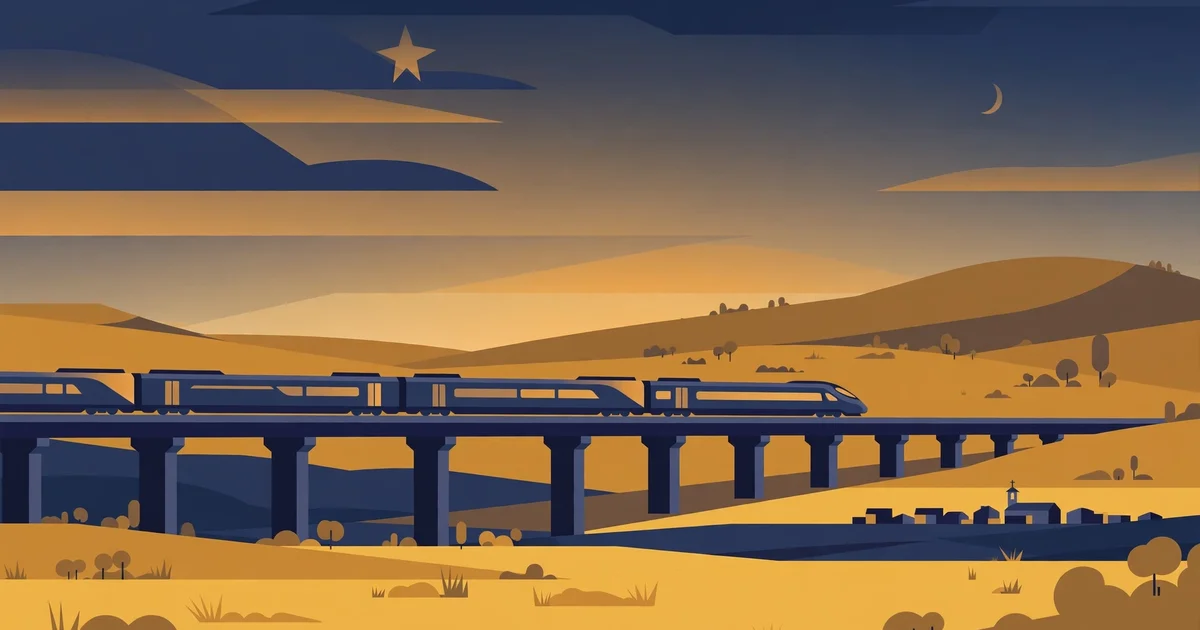
The crash happened at about 8:54 am local time near Urda station in Toledo province, roughly 120 kilometres south of Madrid, on the high-speed line linking the capital with Seville. A train operated by state railway company Renfe struck the rear of a train operated by private company Iryo, which had stopped on the tracks. Several carriages derailed, with some falling down an embankment beside the elevated line.
The Renfe service, AVE 02080, had left Madrid Atocha at 8:00 am for Seville Santa Justa with 397 people on board. The Iryo service, 6076, had departed at 7:54 am on the same route with 147 people aboard. Together the two trains were carrying more than 540 passengers.
A toll that rose through the day
The confirmed death toll climbed steadily as rescue teams reached the wreckage. Regional authorities first reported 10 deaths, then at least 30, before the toll reached at least 64 by Wednesday evening. Regional officials said about 80 people were injured, around 50 of them seriously and 15 critically, and warned that some of the most seriously injured might not survive.
Hundreds of emergency workers, ambulances and helicopters were deployed to the scene, and the Castilla-La Mancha regional government activated its emergency response plan. Survivors were evacuated along a road near the site, while firefighters concentrated on the most severely damaged carriages, which rescuers had not yet fully reached hours after the crash.
Spain’s rail infrastructure operator, Adif, suspended services between Madrid and Andalusia after the collision. Prime Minister Pedro Sánchez cancelled his scheduled engagements to monitor the emergency, and political parties cancelled campaign events. The Spanish Football Federation postponed all 24 Copa del Rey matches scheduled for Wednesday as a mark of respect.
What caused the crash
The cause remains under investigation. Preliminary information from the Transport Ministry indicated that the Iryo train had stopped on orders from Adif because of a signal fault. Renfe said in a statement that after being authorised to continue its journey, its train crashed into the Iryo train, which had remained stationary ‘for reasons we don’t know’.
Transport Minister Óscar Puente told reporters that the train’s control system had failed because of a ‘computer communication issue’. Investigators will now establish how a moving high-speed train came to strike a stationary one on the same track, and whether signalling, authorisation or equipment failure was responsible.
Why it matters
Wednesday’s disaster is Spain’s second fatal high-speed rail accident this year. In January, a crash near Adamuz in Córdoba province killed 46 people. Government sources cited by Spanish media warned the Toledo toll could surpass that figure, which would make it the country’s deadliest rail disaster in years.
The crash also lands one month before an early general election on November 29, in which Sánchez is seeking to extend his eight-year premiership against unfavourable polls. The prime minister had already faced heavy criticism over the January accident, and the investigation’s findings will now be watched closely for what they say about the safety of one of Europe’s busiest high-speed networks.
What’s next
Rescue and recovery work at Urda continues, and the death toll may still rise as teams reach the lowest carriages. Adif has not said when Madrid–Andalusia services will resume, and investigators have begun examining signalling records, the trains’ data recorders and the authorisation given to the Renfe service to proceed.