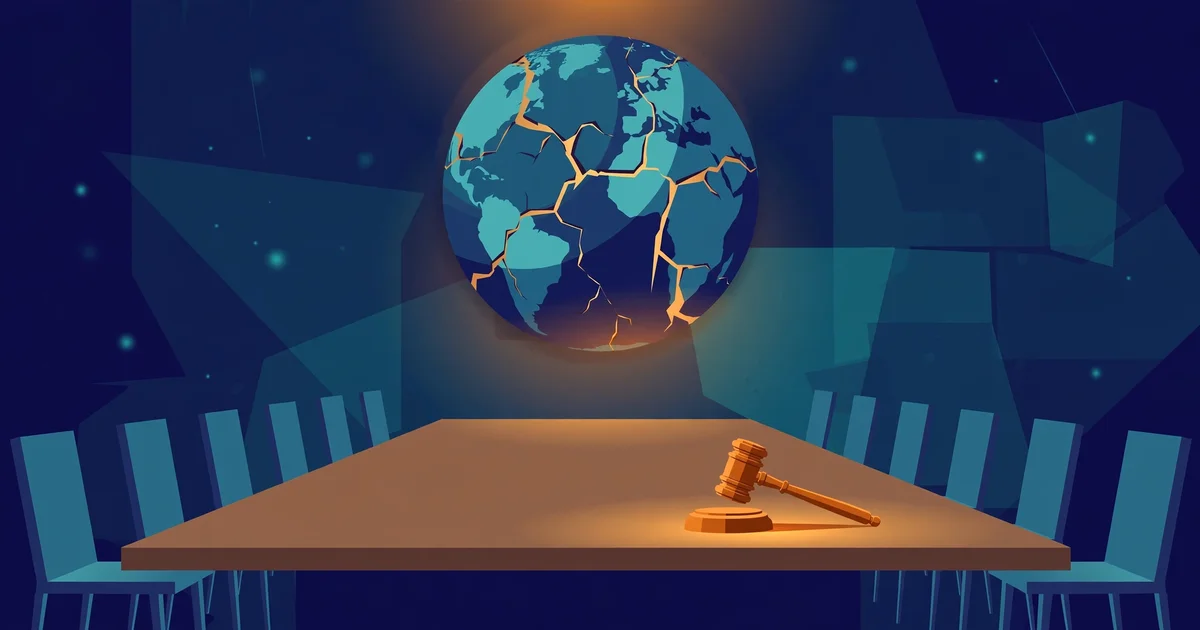
The world’s biggest climate summit has ended in failure. After two weeks of talks that ran two days into overtime, COP31 closed in Antalya, Türkiye, on Sunday, November 22, without adopting a climate deal, after the European Union and a large group of countries rejected a final draft they said was too weak to fight global warming.
It was the longest United Nations climate conference on record, and the first to end without an agreed deal since Copenhagen in 2009. The collapse leaves the central questions, how fast to move away from fossil fuels and who pays to help vulnerable countries adapt, unanswered for another year.
Key takeaways: COP31 ended in Antalya on November 22 with no deal, after the EU and about 130 countries rejected a draft that dropped all mention of fossil fuels and a $120 billion adaptation finance target. The talks ran two days into overtime, the longest COP on record, and the next attempt comes at COP32 in Addis Ababa in November 2027.
How the deal fell apart
Delegations from nearly 200 countries gathered in Antalya on November 9 for talks meant to end on Friday, November 20. Instead, they ran more than 49 hours past the scheduled close, the longest climate summit ever held, according to Reuters.
The final text, a ten-page, 94-paragraph draft known as the Antalya Pact, came from the summit’s co-presidents, Türkiye and Australia. But when it reached the closing plenary on Sunday, it fell apart in public. The European Union formally objected, and Panama, Vanuatu, the Marshall Islands, the United Kingdom, Norway and Belize were among those that withheld support. Russia, China and the Arab states backed the text, but consensus needs every country to agree.
COP31 President Murat Kurum, Türkiye’s environment minister, closed the marathon with a blunt admission. “I understand that there is no agreement on this text. For that reason, these decisions have not been adopted,” he told the plenary.
Australia’s climate minister, Chris Bowen, who chaired the negotiations, said the talks had run into red lines neither side would cross.
United Nations Secretary-General António Guterres said he was “deeply disappointed” governments had failed to reach consensus. “There may be no consensus in the negotiating room. There is no ambiguity in the science,” he said. “The world must do much more to confront the climate crisis, and it must do it now.”
The fossil fuel fault line
The dispute that killed the deal was over two words: fossil fuels. Earlier drafts had called for an “immediate transition away from fossil fuels”. The final draft mentioned them not at all; according to reports from the talks, the words fossil fuels, oil, coal and phase-out did not appear anywhere in its ten pages.
That omission was the red line for the European Union and the climate-vulnerable countries. The EU said it could not accept a text that omitted any reference to fossil fuels. Panama said governments should act rather than negotiate the minimum, and the Marshall Islands warned that accepting the text would betray its people.
Oil-producing states, led by Saudi Arabia, had blocked any mention of phasing out fossil fuels. Saudi Arabia, speaking for the Arab states, defended the draft’s emphasis on carbon capture and storage instead, saying all viable climate solutions should stay on the table.
The draft did acknowledge that the world is now on course to exceed the 1.5°C warming limit in the Paris Agreement, and called for faster carbon-removal technology to eventually reverse the overshoot. It also set a goal of raising electricity’s share of total final energy use to 35 percent by 2035, from around 23 percent now. But for the countries that rejected it, that could not compensate for a text that avoided naming the main cause of warming.
Guterres accused powerful fossil fuel interests of obstructing climate action while continuing to profit. He noted that governments had already agreed at COP28 in Dubai in 2023 to transition away from fossil fuels, and said the priority now must be to accelerate and finance that shift.
The money question
The second fault line was finance, which mattered at least as much as the fossil fuel language to developing countries. A proposed target of $120 billion a year in adaptation finance for developing countries by 2035, a central demand of vulnerable nations, was dropped from the final text entirely.
The draft did reaffirm a commitment to triple adaptation finance by 2035, but without a baseline, which developing countries said made the promise impossible to measure or enforce. The draft put developing countries’ climate finance needs at $5.1 trillion to $6.8 trillion through 2030, or $455 billion to $584 billion a year.
The summit had begun with a stronger-looking draft, which WHAT TODAY? reported here: COP31 Draft Deal Calls for Faster Fossil Fuel Phase-Out and $120 Billion in Climate Adaptation Finance. Between that draft and the final text, the fossil fuel language and the $120 billion target were both removed.
Not everything in Antalya failed. Technical decisions under individual negotiating tracks were adopted, including an agreement on a just transition, and the draft launched an Antalya-Addis Ababa roadmap on adaptation finance. UN climate chief Simon Stiell told the closing plenary the outcome was a warning for COP32, and said the process must build on past achievements rather than step back. But the failure to agree on a political declaration does not erase the obligations agreed at previous summits; it simply means a year of momentum was lost.
What it means for Pakistan
The failure hits Pakistan directly. As one of the countries most exposed to climate change, Pakistan needed adaptation finance more than most, and that was the part of the rejected text with the least substance: a promise to triple funding by 2035, with no starting figure and no dollar amount attached.
Pakistan’s delegation argued that debt-stressed, climate-vulnerable countries cannot rebuild after disasters by borrowing more. Climate Change Minister Musadik Malik told a session at the Pakistan Pavilion that of the Rs16 trillion the state collects, Rs8 trillion goes to servicing debt, declaring that the country’s “shop is closed for debt”.
Rebuilding after the 2022 floods would cost about 9 percent of gross domestic product, Malik said, and the world’s answer had been $8 billion to $10 billion in repurposed loans originally meant for health and education. Over the past five floods, he said, 6,000 people died, 20,000 were injured or disabled and 40 million were affected or displaced. The 2022 floods alone affected about 33 million people and caused more than $30 billion in losses.
On the Loss and Damage Fund, Malik said $822 million had been pledged and $422 million collected, but no money had reached affected communities. Ten countries produce 70 percent of greenhouse gas emissions and receive 80 percent of green finance, he said. “Financing is chasing emissions, not vulnerability.”
Pakistan’s delegation at the closing plenary urged countries to keep working toward consensus, warning that climate action requires “bridges, not barriers”. Pakistan had its own progress to point to: citizens and farmers have installed an estimated 33 to 37 gigawatts of rooftop solar, and clean sources make up 55 percent of the country’s energy mix. WHAT TODAY? reported on how that solar boom is already cutting Pakistan’s gas import bill here: Pakistan’s LNG Bill Falls 36% as Solar Power Cuts Gas Demand.
Why it matters
The climate crisis is not waiting for diplomats. Guterres warned that temperatures keep breaking records, impacts are intensifying and emissions remain dangerously high, with the world now on course to exceed the 1.5°C limit within a few years.
The failure also raises a larger question about the UN climate process itself. The World Resources Institute called it a failure of political leadership, not of the Paris Agreement, and others warned it revives memories of Copenhagen in 2009 and doubts about whether nearly 200 countries can still agree on anything ambitious.
For Pakistan and other vulnerable countries, the stakes are immediate. Floods, heatwaves and glacial melt are already reshaping lives and budgets, while the finance meant to help them adapt remains mostly a promise. Cyclone Akvan, which bore down on India’s east coast just days before the summit ended, was a reminder of how fast those impacts arrive: Cyclone Akvan Bears Down on India’s East Coast as 200,000 People Prepare to Evacuate.
What happens next
The next attempt comes at COP32 in Addis Ababa, Ethiopia, from November 8 to 19, 2027. It will inherit every question Antalya left unanswered: the fossil fuel transition, adaptation finance, and whether the 1.5°C goal can still be kept within reach.
Guterres urged campaigners to keep pressing for action. “The climate crisis will not wait for governments to find common ground. Neither can we,” he said.
Whether governments listen will be tested long before Addis Ababa. The real measure, the UN chief said, will be whether countries cut fossil fuel dependence, expand clean energy, reduce methane, restore forests and deliver climate finance. On each of those tests, Antalya offered words, but no deal.
Frequently asked questions
Why did COP31 fail?
COP31 collapsed because countries could not agree on a final text. The draft dropped all mention of fossil fuels and a $120 billion annual adaptation finance target, and the EU and about 130 countries rejected it as too weak. Oil-producing states had blocked fossil fuel language, while vulnerable countries said the finance promises were unmeasurable.
What was the Antalya Pact?
The Antalya Pact was the draft cover decision put forward by the COP31 co-presidents, Türkiye and Australia. The ten-page text reaffirmed the 1.5°C goal and set an electricity target of 35 percent by 2035, but it did not mention fossil fuels. It was never adopted because consensus could not be reached.
What does the COP31 failure mean for Pakistan?
Pakistan, one of the most climate-vulnerable countries, loses a year of progress on adaptation finance, which was the weakest part of the rejected text. Climate Minister Musadik Malik told the summit Pakistan cannot rebuild after disasters through more debt, noting that half of what the state collects goes to debt servicing.
When is the next climate summit?
COP32 will be held in Addis Ababa, Ethiopia, from November 8 to 19, 2027. It will inherit the unresolved questions from Antalya, including the fossil fuel transition, adaptation finance for developing countries, and whether the 1.5°C goal can still be kept within reach.
Sources
- UN News: “COP31 ends without climate pact as UN chief warns there is ‘no ambiguity in the science'”: https://news.un.org/en/story/2026/11/1168855
- Reuters, via Nikkei Asia: “COP31 climate talks collapse as EU and others reject deal”: https://asia.nikkei.com/spotlight/environment/climate-change/cop31-climate-talks-collapse-as-eu-and-others-reject-deal
- Reuters, via Rappler: “COP31 climate talks collapse as EU and others reject deal”: https://www.rappler.com/world/global-affairs/cop31-outcomes-november-22-2026/
- Channel News Asia (AFP): “Climate talks collapse in chaotic end to COP31”: https://www.channelnewsasia.com/world/cop31-climate-change-talks-collapse-deal-6572946
- Al Jazeera: “‘Disappointing’: Delegates react after COP31 climate talks end without deal”: https://www.aljazeera.com/amp/news/2026/11/22/countries-react-after-cop31-climate-talks-end-in-collapse
- Le Monde: “COP31: International community splits over phasing out fossil fuels and climate adaptation funding”: https://www.lemonde.fr/en/environment/article/2026/11/22/cop31-international-community-splits-over-phasing-out-fossil-fuels-and-climate-adaptation-funding_6786859_114.html
- Down To Earth: “COP31 ends with no major deal, divisions over fossil fuels and climate finance deepen”: https://www.downtoearth.org.in/climate-change/cop31-ends-with-no-major-deal-divisions-over-fossil-fuels-and-climate-finance-deepen
- The Express Tribune: “COP31 ends without overarching deal”: https://tribune.com.pk/story/2641721/cop31-ends-without-overarching-deal
- Skardu Times: “Pakistan rejects loan-based climate recovery at COP31 talks”: https://skardutimes.com/news/pakistan-rejects-loan-based-climate-recovery-at-cop31-talks-d2308b