Key takeaways: Pakistan has resumed offshore oil and gas exploration after 18 years. Turkiye’s seismic vessel Oruc Reis is surveying the Indus and Makran basins, with first drilling targeted for late 2027 if the data looks promising.
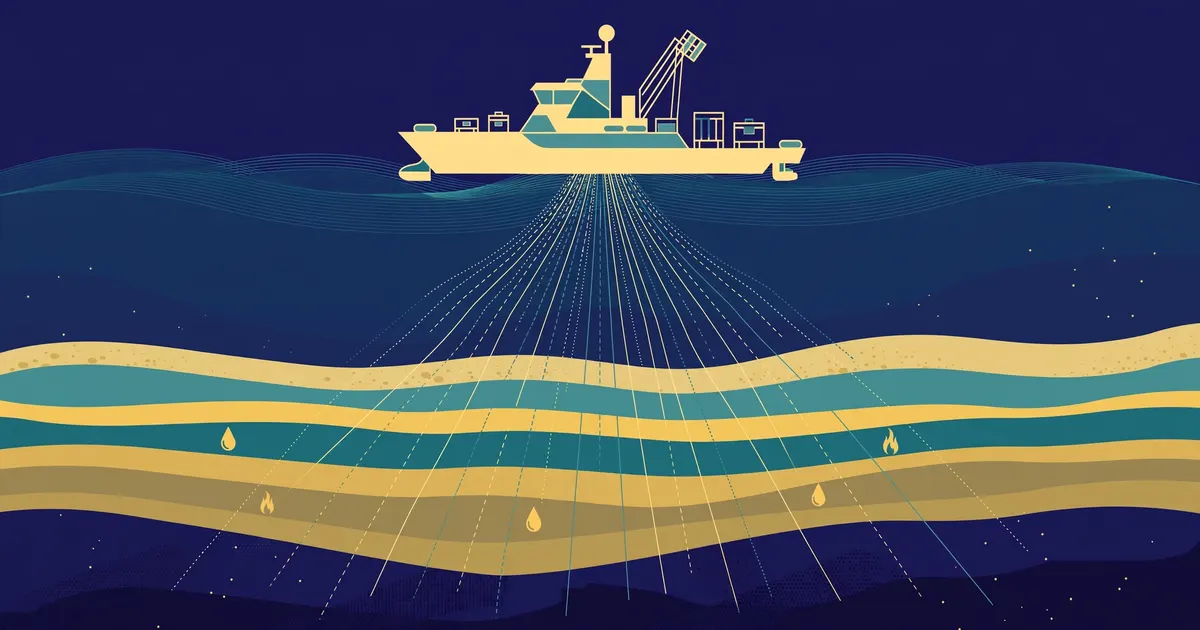
Pakistan has resumed offshore oil and gas exploration after an 18-year gap, with Turkiye’s seismic research vessel Oruc Reis beginning surveys of the Indus and Makran basins off the country’s coast. Pakistan and Turkiye announced the start of the work at a ceremony in Karachi on Friday, November 20, a day after the vessel arrived at Karachi port following a 19-day voyage.
The vessel will collect three-dimensional seismic data across 670 square kilometres in the Indus-C Block over about two months, then two-dimensional surveys along 2,353 kilometres of lines in the Makran blocks. Petroleum Minister Ali Pervaiz Malik said data acquisition and interpretation should be complete within six months.
The Indus-C Block is operated by Turkish Petroleum Overseas Company, a subsidiary of Turkish Petroleum Corporation (TPAO), which holds a 25 percent stake. Pakistan Petroleum Limited holds 35 percent, Oil and Gas Development Company Limited 20 percent and Mari Energies 20 percent. The partners have committed around $80 million in initial exploration spending over three years, rising to between $750 million and $1 billion if the findings justify drilling.
Pakistan launched its first offshore bidding round in 18 years in January 2025, offering 40 blocks; bids came in for 23 covering about 53,510 square kilometres. The offshore zone covers around 300,000 square kilometres, yet only 18 wells have been drilled there since 1947, and none has produced a commercially viable discovery.
Pakistan Petroleum Limited estimates the Indus-C Block could hold between 1.5 trillion and 2 trillion cubic feet of gas. Deputy Prime Minister Ishaq Dar put the value of the country’s untapped natural resources at $8 trillion to $10 trillion, an estimate of his own rather than a surveyed figure.
Dar also cautioned against treating the survey as a guaranteed find. “Offshore exploration is complex, capital-intensive and inherently uncertain. A seismic survey cannot guarantee a commercial discovery, but no discovery can be made without seismic and exploration,” he said.
The two sides also signed three minerals agreements at the ceremony: a shareholders’ agreement between the Pakistan Mineral Development Corporation and Turkiye’s MTA International Company to develop antimony resources in Pishin, Balochistan; a joint venture between Mari Minerals and MTA International for copper, gold and associated minerals in Chagai, Balochistan; and a memorandum of understanding on technical exchanges between the two countries’ geological survey bodies.
Why it matters
Pakistan imports most of its oil and gas, leaving energy bills and fuel prices exposed to global supply shocks. Malik said the Strait of Hormuz crisis had brought energy security into everyday life, and that Pakistan was strengthening its buffers through strategic reserves and greater reliance on indigenous resources.
A domestic offshore discovery would not change that picture overnight, but it would give Pakistan a new source of supply of its own. Even without a discovery, the surveys would leave modern seismic data over blocks that have barely been mapped, which the government can use in future bidding rounds.
What happens next
The Oruc Reis will spend about two months on the Indus-C survey before moving to the Makran blocks. Turkish Energy Minister Bayraktar said drilling could begin next year once the seismic data identifies promising sites, with the two countries targeting first drilling operations by the fourth quarter of 2027.
The test will be what the data shows. If the surveys point to drillable prospects, the partners will move to the far more expensive drilling phase. If they do not, the revival ends as a survey exercise, and Pakistan’s offshore potential remains unproven.
Frequently asked questions
What is the Oruc Reis doing in Pakistan?
Turkiye’s seismic research vessel Oruc Reis arrived at Karachi port on November 19, 2026, to survey Pakistan’s offshore Indus and Makran basins for oil and gas, the first such exploration in 18 years.
When could drilling begin?
Turkish Energy Minister Alparslan Bayraktar said drilling could begin next year once the seismic data identifies promising sites, with the two countries targeting first drilling operations by the fourth quarter of 2027.
Who is involved in the project?
The Indus-C Block is operated by Turkish Petroleum Overseas Company with a 25 percent stake, alongside Pakistan Petroleum Limited (35 percent), Oil and Gas Development Company Limited (20 percent) and Mari Energies (20 percent).
Sources
- Dawn, “Pakistan, Turkiye kick off offshore oil, gas exploration”, November 21, 2026: https://www.dawn.com/news/2046031
- The Nation, “Pakistan resumes offshore oil, gas exploration after 18 years with Turkiye’s Oruc Reis vessel”, November 21, 2026: https://www.nation.com.pk/21-Nov-2026/pakistan-resumes-offshore-oil-gas-exploration-18-years-t-rkiye-s-oru-reis-vessel
- The Maritime Executive, “Turkish Seismic Research Ship to Restart Pakistan’s Oil Exploration Efforts”, November 20, 2026: https://maritime-executive.com/article/turkish-seismic-research-ship-to-restart-pakistan-s-oil-exploration-efforts
Related: Pakistan’s LNG bill fell 36% as solar cuts gas demand | Pakistan minerals forum