Key takeaways:
North Korea said it fired two types of submarine-launched strategic cruise missiles into the East Sea on Wednesday. South Korea’s military confirmed it tracked both launches from pre-launch to impact, while analysts read the test as a step toward a sea-based deterrent amid weeks of rising inter-Korean friction.
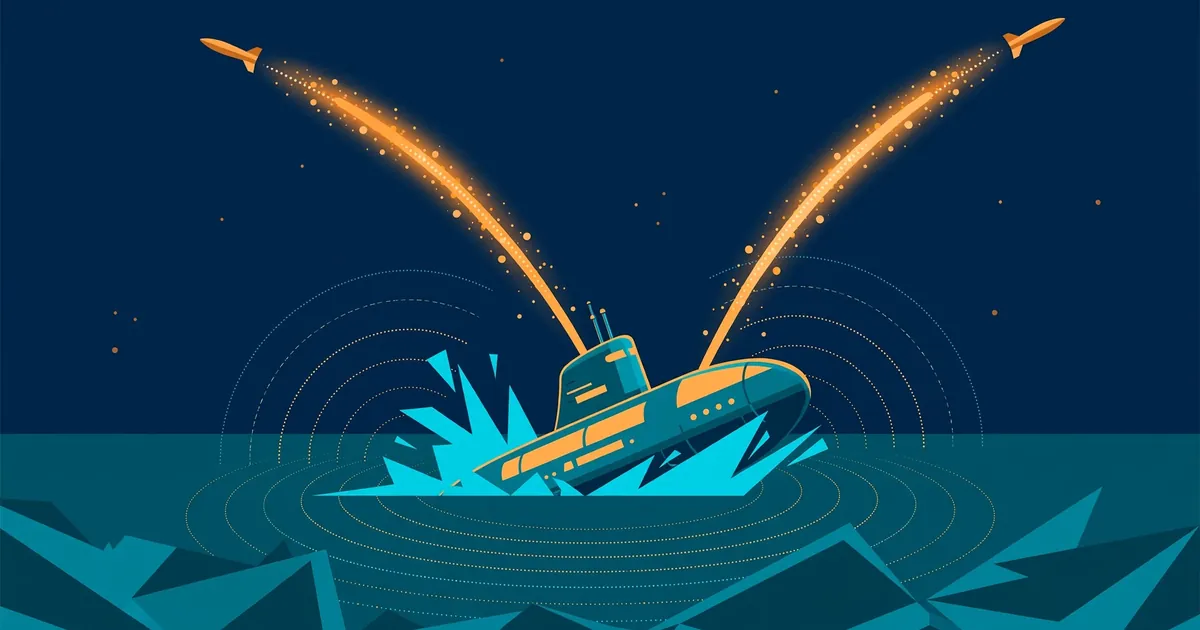
North Korea test-fired two types of submarine-launched strategic cruise missiles on Wednesday, its state news agency reported on Thursday, in the latest display of underwater weapons capability amid weeks of mounting friction with South Korea.
The Korean Central News Agency (KCNA) said the missiles were fired into the East Sea, also known as the Sea of Japan, on October 14. The agency described the launches as a Navy training exercise intended to check the readiness of the country’s underwater combat systems, adding that they had no adverse impact on the security of neighbouring countries.
South Korea’s Joint Chiefs of Staff confirmed the launches, saying its forces had monitored and tracked them “from before launch through the cruise and terminal phases of flight.” A military spokesperson said one missile type appeared to have been launched from a vertical launch system while the other was fired through a torpedo tube — a detail suggesting Pyongyang is testing more than one underwater delivery method.
A carefully staged demonstration
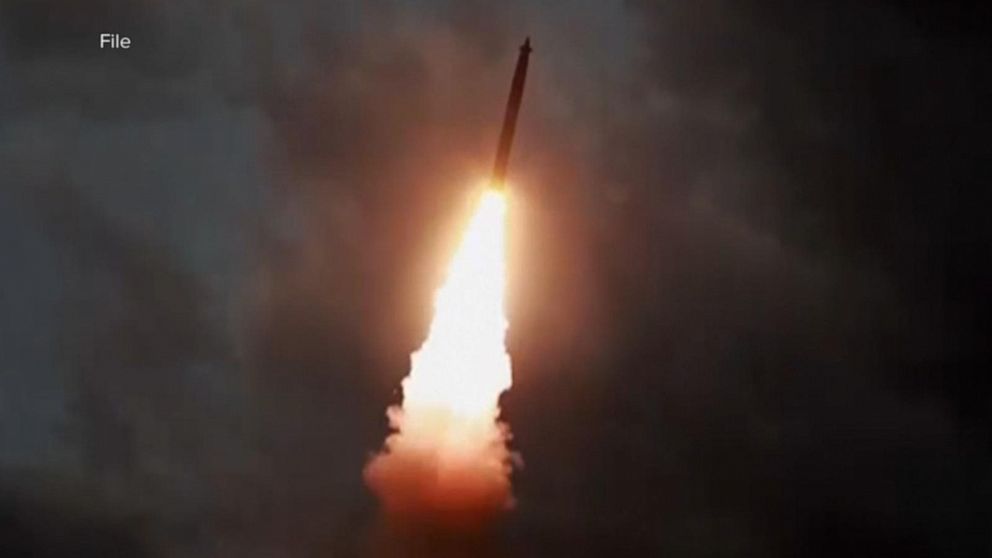
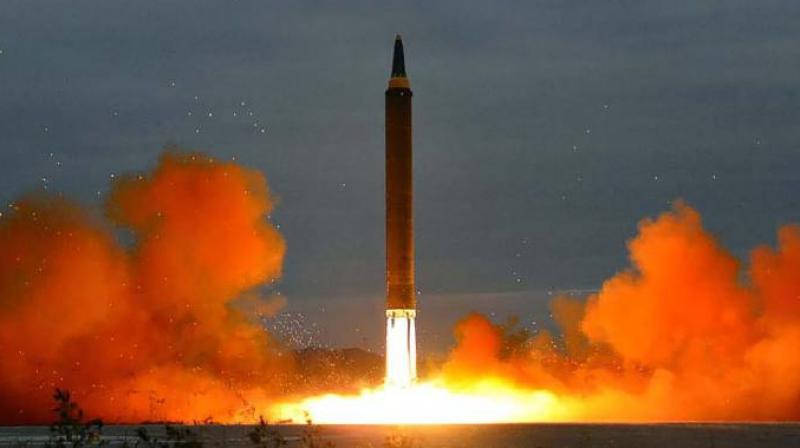
KCNA released photographs showing a missile erupting from the sea trailing thick smoke, another projectile emerging at an angle, and a submarine cruising on the surface. The agency said senior military officials watched the test, including Kim Jong-sik, a senior official of the ruling Workers’ Party, Jang Chang-ha, head of the Missile Administration, and naval engineers specialising in underwater weapons systems.
South Korean analysts told Reuters the images pointed to the Kim Kun Ok Hero, a modified diesel-powered submarine North Korea unveiled in September 2023. Pyongyang has launched missiles from submarines several times in recent years, but the true operational range of its undersea fleet remains uncertain.
One notable detail: the announcement appeared only on KCNA, North Korea’s external-facing state news agency, and was not carried by the Rodong Sinmun, the ruling party’s domestic newspaper — a pattern that analysts often read as a signal that the message is primarily aimed at foreign audiences rather than the home front.
Weeks of friction after a border blast
The test comes after weeks of strained relations between the two Koreas. On September 21, a landmine explosion in the Seoul-controlled area of the demilitarised zone injured three South Korean soldiers. Both Koreas have since tested upgraded missile technology in what observers describe as a retaliatory cycle.
It also follows a test earlier this week: on October 12, North Korea fired a tactical ballistic missile, releasing photographs of that launch two days ago. On Wednesday — the same day as the submarine launches — United States reconnaissance aircraft were tracked flying over the Korean Peninsula, according to South Korean media.
Shin Jong-woo, secretary-general of the Korea Defence and Security Forum, said the launches showed that “combat system tests for operational deployment are under way,” and predicted Pyongyang would likely attempt a submarine-launched ballistic missile launch before long.
Read more: Japan announces first national intelligence strategy — and hints at its own version of the CIA
Why it matters
Undersea missile launches are inherently harder to detect and counter than land-based ones. Cruise missiles are jet-propelled and fly at low altitude, which makes them more difficult for radar and missile-defence systems to track — and a submarine can carry them far closer to targets undetected.
That is why Pyongyang’s push for a credible sea-based deterrent is one of the most closely watched elements of its weapons programme. A proven submarine-launched capability would, in theory, give North Korea a second-strike option — the ability to respond even if its land-based arsenal were destroyed — though analysts stress that North Korea has not yet demonstrated fully operational undersea missile systems.
For Seoul, the test sharpens the picture painted by the September border blast and the duelling missile tests since: a Korean Peninsula where both sides are upgrading their arsenals at the same time, with fewer channels for de-escalation. For Washington and Tokyo, it adds another data point to a year of steadily advancing North Korean weapons development.
Read more: Black Sea drone attacks sink cargo ship; 11 sailors missing
What’s next
The immediate question is whether Pyongyang follows this test with the submarine-launched ballistic missile launch that analysts expect — a significantly more ambitious step, since ballistic missiles travel faster, further and higher, and would mark a leap toward the sea-based deterrent leader Kim Jong Un has long prioritised.
South Korea’s military will be watching closely; its announcement that it tracked the latest launches from pre-launch through impact was itself a message about its surveillance capabilities. Any further test is likely to draw fresh diplomatic responses from Seoul, Washington and Tokyo, and could push inter-Korean relations — already frayed by the border blast and the cycle of retaliatory tests — into an even colder phase.
Frequently asked questions
What did North Korea test on October 14?
North Korea said it fired two types of submarine-launched strategic cruise missiles into the East Sea on October 14, 2026. South Korea’s Joint Chiefs of Staff confirmed the launches, saying one missile appeared to come from a vertical launch system and the other from a torpedo tube, indicating two distinct underwater delivery methods.
What is the difference between a cruise missile and a ballistic missile?
Cruise missiles are jet-propelled and fly at low altitude along a relatively flat trajectory, making them harder to detect on radar and intercept. Ballistic missiles follow a high-arcing trajectory into space before descending at extreme speed. Both can be launched from submarines, but ballistic missiles generally travel further and are harder to stop once in terminal phase.
Why are submarine-launched missiles a bigger concern than land-based ones?
Submarines are mobile and hidden, so adversaries cannot be sure where an attack might come from. A working sea-based missile capability would give North Korea a potential second-strike option — the ability to retaliate even after its land-based weapons were destroyed — which complicates deterrence calculations for South Korea, Japan and the United States.
How have South Korea and the US responded?
South Korea’s military publicly confirmed it tracked the launches from pre-launch through the cruise and terminal phases, signalling its surveillance capabilities. US reconnaissance aircraft were tracked over the Korean Peninsula on the day of the launches. No new sanctions or formal diplomatic responses had been announced at the time of writing.
Sources
- Reuters (Jack Kim and Joyce Lee, Seoul) — “North Korea says it tested submarine-launched cruise missiles, KCNA says” — wnflsports.com (October 15, 2026)
- Channel News Asia — “North Korea test-fires two types of submarine-launched strategic cruise missiles” — channelnewsasia.com (October 15, 2026)
- Malay Mail — “North Korea tests submarine-launched missiles amid rising tensions with South Korea” — malaymail.com (October 15, 2026)
- Aju Press (Kim Hee-su, Seoul) — “North Korea tests cruise missiles as US surveillance aircraft fly over peninsula” — ajupress.com (October 15, 2026)