Key takeaways
Russian missiles and a suspected jet-powered drone crashed in south-eastern Poland on Friday, November 20, during a massive Russian attack on Ukraine. Nobody was hurt, but Prime Minister Donald Tusk called the incursion an intentional provocation timed to coincide with allied military exercises, and NATO Secretary General Mark Rutte condemned it as a grave violation of Polish airspace.
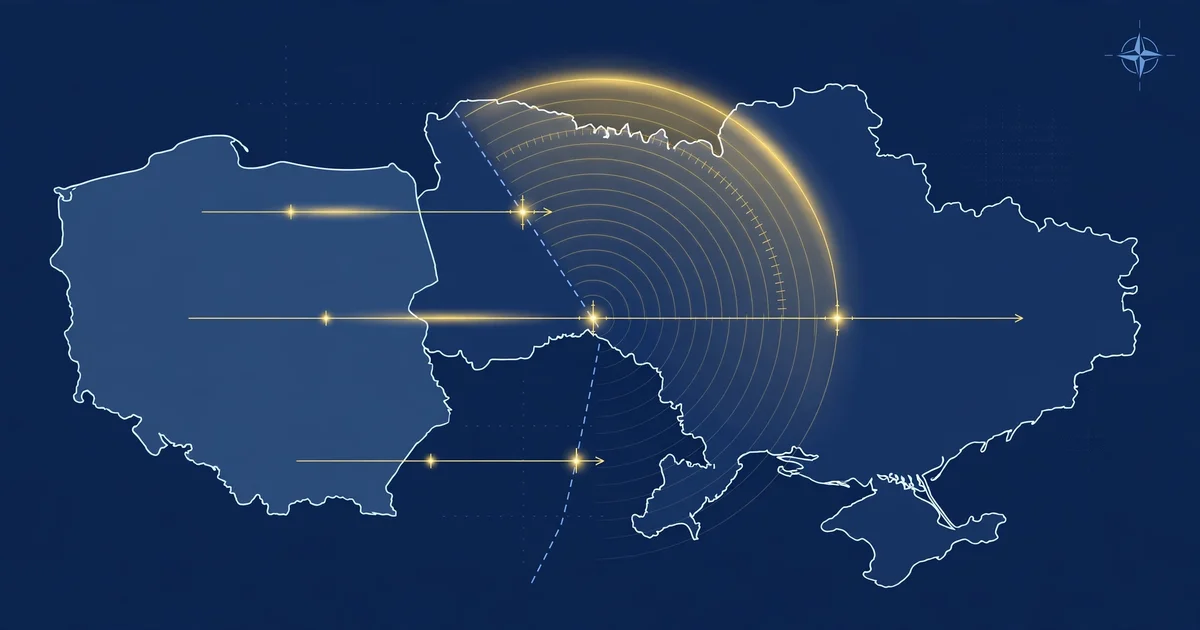
What happened in Poland
Poland said three Russian weapons came down on its territory early on Friday morning, while Russia was carrying out one of its biggest aerial attacks on Ukraine since the full-scale invasion began in 2022.
Defence Minister Wladyslaw Kosiniak-Kamysz said a Russian Kh-101 cruise missile hit a rural area at Nowy Lipowiec in south-eastern Poland, about 50 kilometres (31 miles) from the Ukrainian border. The missile crashed at about 06:30 local time (05:30 GMT). A local resident, Natalia Szponar, said she was getting her children ready for school when she heard a “whistle and a dull impact”. The moment of impact was caught by a camera on a farm, and officials later said there was no risk to residents.
A second suspected missile came down near Rudnik nad Sanem, to the west of Nowy Lipowiec, and a jet-powered drone crashed to the south near Molodycz. Polish military officials said the drone may have been a Russian Geran-5. None of the three impacts caused casualties or substantial damage, and Polish authorities secured the sites and opened investigations at all three locations.
Polish and NATO aircraft were scrambled in response, including Polish, Swedish and Dutch jets, and NATO air defence activated ground-based radar systems. Poland said its forces identified as many as 11 missiles and drones in Ukrainian airspace that could have threatened to enter Polish airspace.
Poland and NATO did not try to shoot the missiles and drone down. Brigadier General Ireneusz Nowak, the Polish Armed Forces operational commander, said the conditions did not meet Poland’s rules of engagement, and that the projected impact locations were not expected to cause damage. Poland’s defence minister had said in July that Polish forces would engage incoming projectiles if the engagement could threaten populated areas, a risk assessment that NATO militaries also apply.
Why Warsaw calls it a provocation
Prime Minister Donald Tusk said the incident appeared to be deliberate, and linked it directly to the military exercises taking place in the region at the time.
“We are dealing with an intentional provocation,” Tusk told a televised press conference in Warsaw. “Nobody can say that this was an innocent coincidence,” he added, saying he had informed NATO straight away. He suggested the provocation “may have been linked with the fact that there are (military) exercises taking place on the territory of Poland”.
The timing is the centre of the Polish case. European troops were taking part in an unprecedented two-week exercise that began on November 9 in Nowa Deba, in south-eastern Poland. The exercise, called Exercise Koalicja, is the first by the Multinational Force-Ukraine, the British- and French-led military arm of the Coalition of the Willing, a group of 37 pro-Ukraine states preparing for a possible post-war peacekeeping deployment in Ukraine. Between 5,000 and 6,000 personnel from Belgium, France, Estonia, Spain, the Netherlands, Lithuania, Germany, Sweden and the United Kingdom are taking part, with Polish forces providing logistical support.
Friday was the exercise’s VIP day, and allied defence ministers were in or travelling to Nowa Deba at the time, including the French and British defence ministers. The missile that came down near Rudnik nad Sanem crashed about 35 kilometres from the exercise site.
The Institute for the Study of War assessed that the Kremlin conducted the airspace violations to coincide with the exercise, in an effort to deter the coalition’s support for Ukraine and to test NATO’s responses. Russia has made no comment about the incidents in Poland.
NATO’s response
NATO Secretary General Mark Rutte condemned what he called “grave violations of Polish airspace” and said NATO jets had been scrambled in response. “This incident is clearly dangerous, a consequence of Russia’s ongoing war against Ukraine,” Rutte said. He was due to visit Warsaw on Saturday, November 21, to discuss the incident with Polish leaders.
Poland has asked NATO for additional support. Kosiniak-Kamysz said he would ask allies to deploy more air defence systems, and specifically requested additional AWACS surveillance aircraft and F-35 fighter jets for Poland. He also said he would appeal to Rutte to reinforce NATO’s Eastern Sentry operation, the mission launched in September 2025 to coordinate air defence in Poland and other frontline NATO states after a large-scale Russian drone incursion into Poland earlier that month.
Notably, Poland did not invoke Article 4 of NATO’s founding treaty, the provision under which an ally can call for formal consultations when it considers its security threatened. The Institute for the Study of War noted the decision, warning that NATO risks raising the threshold for allied responses to Russian airspace violations by not using the alliance’s provisions for collective action.
Article 5, the collective defence clause under which an attack on one member is treated as an attack on all 32, has not been raised either. For now, Warsaw’s response is diplomatic and military in the defensive sense: more air defence, more allied aircraft, and a demand that the alliance take the incursion seriously.
The attack on Ukraine behind it
The Polish incidents took place during the largest Russian missile and drone strike on Ukraine so far in November. Ukrainian President Volodymyr Zelenskyy said Russian forces launched 27 ballistic missiles, 84 cruise missiles and 404 drones overnight on November 19 to 20, in waves spaced 20 to 30 minutes apart. Ukrainian forces intercepted roughly 94 percent of the cruise missiles and drones, but only about 11 percent of the ballistic missiles. Zelenskyy said eight people were killed.
The strikes hit energy production and transmission lines, logistics infrastructure and defence-industrial facilities across at least 15 Ukrainian regions and Kyiv. Three bridges across the Dnipro River in Kyiv, the Podilsko-Voskresensky, Darnytskyi and Southern bridges, were damaged, though restricted traffic later resumed.
The scale of the attack followed a warning from Russian President Vladimir Putin. On November 19, Putin vowed that Russia would launch “much more painful” strikes in retaliation for Ukrainian attacks on the Kerch Strait Bridge, which links occupied Crimea with the Russian mainland. WHAT TODAY? reported on November 17 that Ukraine had struck the bridge, collapsing a road span into the Kerch Strait.
Two drones, believed to be Russian strike drones involved in the attacks on Ukraine, also violated Moldovan airspace on November 20 before re-entering Ukrainian airspace.
Why it matters
This is not the first time Russian weapons have crossed into NATO territory, and that is precisely why the incident matters. In September 2025, a large-scale Russian drone incursion into Poland prompted NATO to launch the Eastern Sentry mission. In November 2022, a missile landed in the Polish village of Przewodow, killing two people; it was later assessed to have been a Ukrainian air-defence missile. Each incident has forced the alliance to decide where the line sits between an accident of war and a deliberate test.
Friday’s incident looks different from both of those. Polish officials identified the weapons as Russian, the timing coincided with a high-profile allied exercise, and one missile landed within 35 kilometres of troops rehearsing a post-war deployment to Ukraine. That combination is why Warsaw used the word “provocation” and why NATO’s secretary general called the violation grave rather than treating it as stray debris.
For Pakistan and the wider world, the stakes are practical as well as strategic. A miscalculation on NATO’s eastern border could widen a war that already shapes global energy prices, grain supplies and shipping security, all of which feed directly into Pakistan’s import bill. The incident also lands while the United States is mediating talks to end the war. American negotiators have floated proposals including NATO-style security guarantees for Ukraine, but Moscow has repeatedly rejected Ukrainian NATO membership and any deployment of foreign troops, leaving the diplomacy and the fighting on parallel tracks.
What’s next
Rutte’s visit to Warsaw on Saturday is the first test of how NATO will answer. Poland wants more air defence assets on its eastern border, including AWACS aircraft and F-35 jets, and a stronger Eastern Sentry mission. Whether allies agree, and how quickly, will show whether Friday’s incursion changes the alliance’s posture or is absorbed as another incident in a lengthening list.
Russia’s next move matters just as much. Moscow has not commented on the Polish incidents, and its defence ministry said only that the sites it hit on Friday were linked to the Ukrainian military. If further Russian strikes on Ukraine send more weapons across the border, Poland will face the same decision again, under greater pressure, about whether to shoot them down.
The war itself shows no sign of slowing. Russia has been striking bridges across the Dnipro since early October, and Ukraine has answered with strikes on the Kerch Strait Bridge. The cycle of escalation that produced Friday’s attack on Kyiv, and the missiles that fell in Poland, is still turning.
Frequently asked questions
What happened in Poland on November 20?
Two Russian missiles and a suspected jet-powered drone crashed in south-eastern Poland during a massive Russian attack on Ukraine. A Kh-101 cruise missile came down at Nowy Lipowiec, about 50 kilometres from the Ukrainian border, a second suspected missile near Rudnik nad Sanem, and the drone near Molodycz. Nobody was hurt and no substantial damage was reported.
Why does Poland call it a deliberate provocation?
Prime Minister Donald Tusk said the incident appeared intentional because it coincided with Exercise Koalicja, a major allied military exercise in Nowa Deba, on its VIP day, when allied defence ministers were present. One missile landed about 35 kilometres from the exercise site. Tusk said “nobody can say that this was an innocent coincidence”.
How did NATO respond?
Secretary General Mark Rutte called the incident a grave violation of Polish airspace, NATO jets were scrambled, and Rutte was due to visit Warsaw on Saturday, November 21. Poland asked for additional air defence support, including AWACS aircraft and F-35 jets, but did not invoke NATO’s Article 4 consultation provision.
How big was the Russian attack on Ukraine that night?
Ukraine said Russia launched 27 ballistic missiles, 84 cruise missiles and 404 drones overnight on November 19 to 20, the largest strike package of the month. Eight people were killed, and three bridges across the Dnipro River in Kyiv were damaged. Russia said the strikes were retaliation for Ukrainian attacks on the Kerch Strait Bridge.
Related: Read about the peace declaration signed by Trump, Xi and Putin in Shenzhen.
Sources
- BBC News, “Russian missile hits Poland as Ukraine’s allies hold military exercise, says Tusk” (via The Nation)
- Associated Press, “Russian missiles land in Poland, as Europe held military drills nearby. NATO calls it a violation” (via The Manila Times)
- Institute for the Study of War, “Russian Offensive Campaign Assessment, November 20, 2026“
- The Daily Star, “Russia pummels Ukraine, missile hits Poland, after Putin threat“
- The Express Tribune, “Russian missiles land in Poland amid NATO drills“