Key takeaways
- On Friday, Trump signed an executive order waiving sanctions, restrictions and duties under the Lindsey Graham Russia sanctions Act — days before they were due to take effect.
- The suspended measures included up to 100% tariffs on goods from the five largest buyers of Russian oil and gas, a direct threat to India.
- The waiver follows Trump’s deal with Putin for Russian diesel shipments, aimed at cutting US fuel prices ahead of the November 3 midterms.
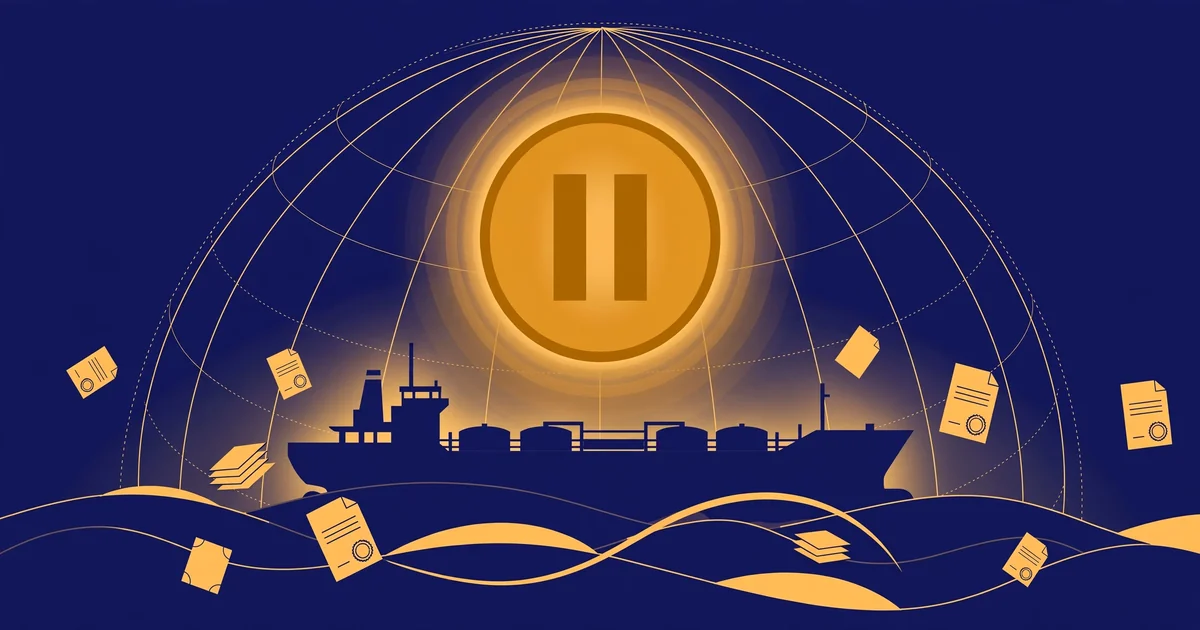
Donald Trump has put on hold one of the toughest sanctions packages Congress has passed against Russia, signing an executive order on Friday that suspends the measures just days before the tariff provisions were set to activate. The decision hands an immediate reprieve to India and other major buyers of Russian energy, which had faced tariffs of up to 100% on their exports to the United States.
The White House said Trump submitted a certification to Congress declaring the waiver to be in America’s national interest. “I have submitted to the Congress a certification that the issuance of such a waiver at this time is in the national interests of the United States,” the president wrote in the order, Reuters reported.
The Lindsey O. Graham Sanctioning Russia and Iran Act of 2026, which Trump signed into law in September after it passed Congress with large bipartisan majorities, was designed to choke off the revenues Moscow uses to fund its war in Ukraine. Instead of enforcing it, the president has now pressed pause — setting up a fresh confrontation with lawmakers from both parties.
What the order suspends
The legislation gave the president authority to impose punishing duties on any country that kept buying Russian energy after a set deadline. Under its terms, goods from the five largest importers of Russian crude oil or gas would face tariffs of up to 100% if those countries knowingly made new purchases on or after October 18, 2026. The same 100% duty would apply to the top five facilitators of Russian sanctions evasion, while goods from Russia itself could be hit with duties of up to 500%, according to the White House release summarised by ETV Bharat.
Section 4 of the executive order suspends all of that immediately. The waived provisions also include sanctions and restrictions on foreign persons under several sections of the Act. The suspensions remain in effect until Trump, or where authorised the secretary of state, decides further action is necessary.
The administration has not dropped the powers entirely. The US Trade Representative has been directed to keep monitoring how much Russian-origin crude and gas countries are buying, and how sanctions are being evaded, and to report back to the president. The message is a warning, not a surrender: the duties could return if Washington decides circumstances change.
The diesel deal behind the waiver
The waiver did not arrive in a vacuum. Days earlier, Trump announced what he described as an agreement with Russian President Vladimir Putin for Moscow to supply large volumes of diesel to help bring down fuel prices in the United States and beyond.
According to Trump’s account of the arrangement, Russia would immediately provide more than 300,000 tonnes of diesel, followed by another 500,000 tonnes in November, one million tonnes “immediately thereafter” and a further three million tonnes within a short period of time. Announcing the deal on Truth Social, Trump declared that diesel prices for Americans and the world would be “coming down, in record numbers, and fast,” calling lower fuel costs his “greatest priority” for farmers, ranchers and truckers.
The timing is political as much as economic. US diesel prices hit a record average of $6.52 a gallon in September, and were still around $6.28 on Friday, the Times of India reported — a painful number for businesses and voters just weeks before the November 3 midterm elections, adding to US price pressures.
The deal also reflects a broader warming in Trump’s posture toward Moscow, building on earlier Russia-Ukraine energy diplomacy: Reuters noted he has grown warmer toward Russia while publicly criticising Ukrainian President Volodymyr Zelenskyy, at one point suggesting Ukraine needed a new leader.
Why India got the biggest relief
No country had more at stake from the sanctions package than India. The country imports more than 88% of the crude oil it consumes, and Russian barrels accounted for 45% of its total imports in August — about 2.08 million barrels per day, the Indian Express reported. A 100% tariff on Indian goods entering the US market would have been a hammer blow to its exporters, and Washington had repeatedly pressed New Delhi to reduce its purchases of Russian energy.
India’s foreign ministry has been pushing back. Spokesman Randhir Jaiswal said on Friday that New Delhi’s approach to securing its energy needs was guided by what oil was available on the market and by prevailing global circumstances — a diplomatic way of saying India buys where the price and supply are right.
The waiver removes the immediate threat, though not the underlying pressure. Indian outlets cautioned that the suspension does not mean every US trade measure affecting India has been withdrawn, and Washington’s monitoring stays in place. But the deadline that had been hanging over New Delhi’s oil strategy has been lifted — for now.
A bipartisan revolt in Congress
The waiver landed in the middle of an open rebellion from the very Congress that wrote the law. Three days earlier, twelve senators — six Democrats and six Republicans, including former Republican leader Mitch McConnell — wrote to Trump demanding he rescind the Russian diesel agreement and use the Act’s sanctions powers instead.
“This deal is a gift to our adversary and a betrayal of our Allies; it should be rescinded,” the senators wrote, according to the office of Senator Richard Blumenthal, which published the full text.
The letter targeted Treasury General License No. 135, which the senators said lifted sanctions on Russia’s diesel exports, and urged pressure on Russia and what it called the chief enablers of its war, “in particular China.” The senators acknowledged the need to lower energy costs but argued the diesel arrangement would have a negligible impact on fuel prices. Notably, the letter did not mention India.
Why it matters
Trump signed the Graham Act himself and watched it pass with sweeping bipartisan support; waiving it days before its provisions took effect shows he will bend the law toward his own diplomacy — cheaper fuel, a working channel to Putin — rather than the punitive script Congress wrote. For energy markets, the waiver is a short-term volatility reducer: the prospect of 100% tariffs on major oil buyers had threatened to scramble trade flows and spike prices. For Ukraine, it is another signal that Washington’s pressure on Moscow is negotiable — and for South Asia, it removes a sword hanging over India’s energy policy, with ripple effects for every country in the region that tracks the same global fuel benchmarks, including Pakistan, where Pakistan’s daily fuel reviews track the same price movements. Follow our US-Russia sanctions thread for the full backstory.
What’s next
Watch whether the waiver holds through the November 3 midterms or whether Congress forces the issue — the twelve-senator letter was the opening shot. Watch the diesel itself: whether the promised volumes actually arrive, and whether they move pump prices. If prices stay near $6.28 a gallon into November, the critics’ “negligible impact” argument gets stronger. And watch the Trade Representative’s monitoring — any finding that purchases are continuing could give Trump cover to either reimpose the duties or extend the waiver.
Frequently asked questions
What did Trump waive on Friday?
Trump signed an executive order suspending sanctions, restrictions and duties under the Lindsey O. Graham Sanctioning Russia and Iran Act of 2026, days before they took effect. He certified to Congress that the waiver was in the national interest. The waivers stay in place until he or the secretary of state decides further action is needed.
Who would the sanctions have hit hardest?
The five largest importers of Russian crude oil and gas faced tariffs of up to 100% if they made new purchases on or after October 18, 2026. India — which gets 45% of its imported crude from Russia — was the most exposed. The top five facilitators of Russian sanctions evasion faced the same 100% duty.
Why is the US making a diesel deal with Russia?
Trump said Russia agreed to supply over 300,000 tonnes of diesel immediately, with millions more tonnes to follow, to bring down fuel prices. US diesel hit a record $6.52 a gallon in September and remains near $6.28 — a political problem ahead of the November 3 midterm elections, when fuel costs are a top voter concern.
Does this mean sanctions on Russia are over?
No. The order only waives specific provisions of this Act; other US sanctions on Russia remain in force. The US Trade Representative must keep monitoring Russian energy purchases and sanctions evasion and report to the president, leaving the door open for the duties to be reimposed.
Sources
- Reuters, “Trump waives many Russia-related sanctions, tariffs before they were to take effect” (Oct 17, 2026) — https://www.reuters.com/world/europe/trump-waives-many-russia-related-sanctions-tariffs-before-they-were-take-effect-2026-10-17/
- Indian Express, “Trump waives sanctions on Russia bill that gave power to impose 100% tariff on India” (Oct 17, 2026) — https://indianexpress.com/article/world/trump-waives-sanctions-russia-bill-tariffs-purchase-oil-gas-putin-india-10925343/
- ETV Bharat, “Relief For India As Trump Waives Steep Tariffs On Russian Oil And Gas” (Oct 17, 2026) — https://www.etvbharat.com/en/international/trump-puts-new-russia-sanctions-passed-by-congress-on-hold-saying-waiver-is-in-us-national-interest-enn26101700582
- Times of India, “Trump waives Russia sanctions, tariffs under Graham Act” (Oct 17, 2026) — https://timesofindia.indiatimes.com/business/international-business/trump-waives-russia-sanctions-restrictions-and-duties-under-graham-act-diesel-us-midterms/articleshow/135005808.cms
- Office of Sen. Richard Blumenthal, “Bipartisan Senators Call on Trump to Rescind Russian Diesel Deal” (Oct 13, 2026) — https://www.blumenthal.senate.gov/newsroom/press/release/bipartisan-senators-call-on-trump-to-rescind-russian-diesel-deal-and-implement-sanctions-authorized-by-congress-last-month-on-enablers-of-putins-war-against-ukraine
- Mathrubhumi English, “Trump waives Russia sanctions, tariffs under Graham Act; India gets relief” (Oct 17, 2026) — https://english.mathrubhumi.com/news/world/trump-waives-russia-sanctions-tariffs-graham-act-india-relief-eg7j7fw6
- News18, “Trump Eases Russia Sanctions, Tariffs Amid Diesel Price Surge, In Relief For India” (Oct 17, 2026) — https://www.news18.com/world/trump-eases-russia-sanctions-tariffs-amid-diesel-price-surge-in-relief-for-india-10385899.html