KEY TAKEAWAYS
Karl Deisseroth, Peter Hegemann and Georg Nagel have won the 2026 Nobel Prize in Physiology or Medicine for optogenetics, a technique that uses light to switch individual nerve cells on and off. The discovery began with a light-sensing protein in pond algae and now helps scientists map the brain — and may one day treat blindness and brain disorders.
The Nobel Assembly’s Pick
Three scientists — American Karl Deisseroth and Germans Peter Hegemann and Georg Nagel — have won the 2026 Nobel Prize in Physiology or Medicine for their discoveries concerning light-gated ion channels and optogenetics. The Nobel Assembly at Karolinska Institutet in Stockholm announced the winners on Monday, October 5.
Deisseroth, 54, is a professor of bioengineering and psychiatry at Stanford University. Hegemann, 71, is based at Humboldt University in Berlin, and Nagel, 73, at the University of Würzburg in Germany. The three will share the prize money of 12 million Swedish kronor, roughly US$1.2 million.
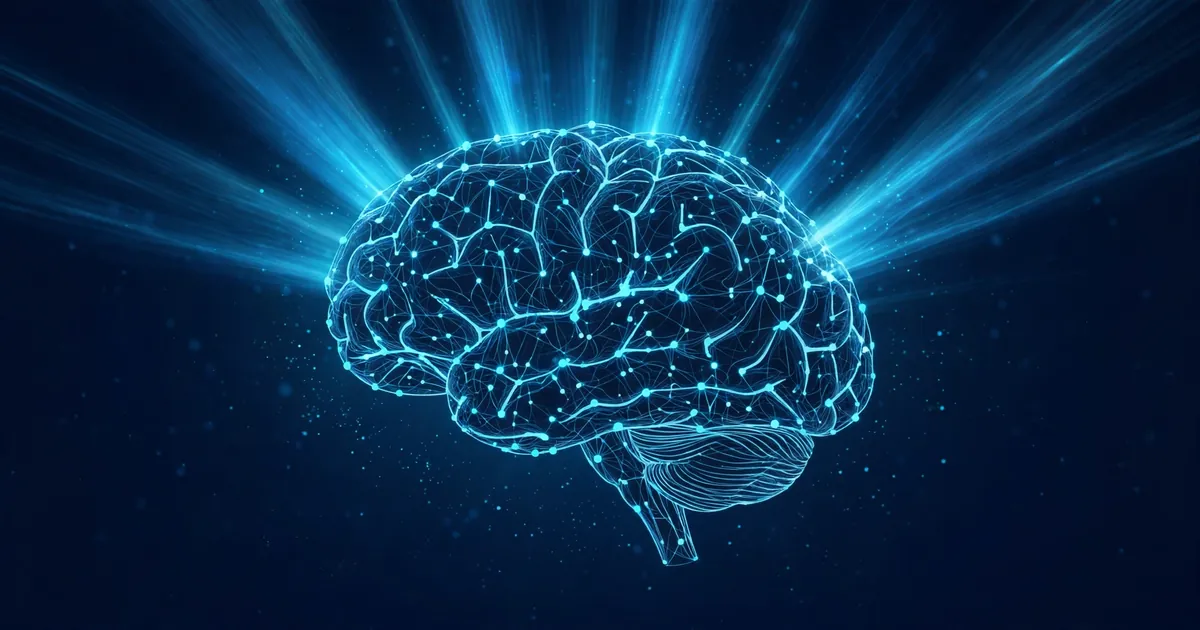
Optogenetics is, in the simplest terms, a remote control for the brain. It allows researchers to switch the activity of individual nerve cells on or off using light — while the brain is still living and working.
“This method makes it possible to switch on, or off, the activity of individual nerve cells in a living brain,” the Nobel Assembly said in its announcement. “This method is now being used in laboratories around the world to reveal the brain’s mysteries.”
Deisseroth was working late on a paper and just starting to drift to sleep when the committee called. “My phone rang at my bedside. There was about 30 seconds when I had trouble forming words,” he told reporters. Nagel received the news while relaxing on a terrace in Italy: “I didn’t expect this, really! I thought it’s still too early to get this prize in medicine.”
A Technique Born From Pond Algae
The story of the discovery is as unusual as the technique itself. It began not in a brain laboratory but with a single-celled pond alga called Chlamydomonas, which swims toward light in a fraction of a second.
In the 1990s, Hegemann set out to understand how the alga senses light. He and Nagel eventually isolated a light-sensitive protein on the alga’s surface — channelrhodopsin. When exposed to blue light, the protein opens a channel in the cell wall, letting charged ions flow in and generating an electrical signal. Their findings, published in the early 2000s, showed that the protein could be inserted into other kinds of cells to make them light-sensitive too.
Deisseroth then took the decisive step: he introduced the gene for channelrhodopsin into nerve cells from rats. When those cells were exposed to blue light, they fired nerve signals on demand. He published the breakthrough in 2005, and within two years showed the light-controlled switch could operate inside the brains of living mice. The technique was named optogenetics in 2006.
“It laid the foundation for a new era in neuroscience,” the Nobel committee said — a tool that finally lets scientists test what specific groups of neurons actually do.
Why It Matters
Before optogenetics, researchers had crude ways of probing individual groups of neurons. Electrical stimulation, for example, activates many neighbouring cells at once, making it hard to know which cells caused an effect. With optogenetics, scientists can make one particular group of neurons light-sensitive and activate or silence just those cells — rather like going from dimming every light in a building to flipping one single switch.
That precision lets researchers ask questions that were once nearly impossible to answer: which neurons trigger a seizure, which brain circuits are involved in addiction, which cells form a memory, and which circuits contribute to depression or chronic pain. By flipping specific cells on and off and watching what happens, they can draw far stronger cause-and-effect links between brain activity and behaviour.
“Optogenetics provides opportunities for mapping the brain in a way that we could once only dream of,” said Per Svenningsson, chair of the Nobel Committee for Physiology or Medicine.
The medical promise goes beyond research. Diseases such as Parkinson’s, epilepsy, depression and chronic pain all involve abnormal activity in particular neural circuits. If scientists can pinpoint exactly which cells are malfunctioning, future treatments may be able to target those circuits with far more precision than today’s drugs.
One application has already reached patients. In 2021, scientists reported the first case of partial vision restoration using optogenetics in a person with retinitis pigmentosa, an inherited disorder that destroys sight. Researchers are now studying the technology further for vision disorders — a step the Nobel committee highlighted as evidence of the method’s potential.
The Week Ahead
The medicine prize traditionally opens the annual Nobel announcements, with the prizes in physics, chemistry, literature, peace and economics to follow over the coming days. Read our coverage of this week’s other major international story.
Last year’s medicine prize went to American scientists Mary Brunkow and Fred Ramsdell and Japan’s Shimon Sakaguchi, for work revealing how the immune system spares healthy cells while attacking disease — research that has opened new avenues for treating conditions such as cancer. Brazil also heads to a presidential runoff this week — more international coverage on WHAT TODAY?
The Nobel Prizes were created under the terms of Swedish inventor Alfred Nobel’s will and have been awarded since 1901. Laureates receive their awards on December 10, the anniversary of Nobel’s death, at ceremonies in Stockholm — with the exception of the Peace Prize, which is presented in Oslo.
Sources
- Reuters — American Deisseroth and Germans Hegemann and Nagel win 2026 Nobel medicine prize (October 5, 2026)
- CNN — Nobel Prize in medicine awarded to trio for technique that helps decode mysteries of the brain (October 5, 2026)
- The Wall Street Journal — Trio Awarded Nobel Prize in Physiology or Medicine for Neuroscience Discoveries (October 5, 2026)
- Le Monde — Nobel Prize in Medicine 2026: One American and two Germans honored for technique activating neurons with light (October 6, 2026)
- New Scientist — Nobel prize for medicine goes to trio who developed optogenetics (October 5, 2026)
- The Indian Express — Nobel prize for medicine: How it can help with Parkinson’s, epilepsy and memory (October 6, 2026)