Key takeaways
- The US military has drawn up new strike plans that could include the GBU-43/B “mother of all bombs” against Iranian energy and nuclear sites, CNN reports, citing US officials.
- President Trump, in a Newsmax interview, said the weapon is “not nuclear at all” but would not say whether he had approved its use.
- Any strike would be a notable escalation in a war now in its eighth month, with the November 3 midterm elections looming and Republicans bracing for voter backlash.

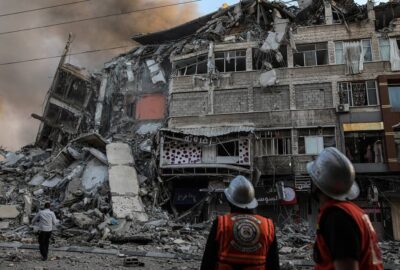
The United States military has developed new strike plans that include potentially dropping the so-called “mother of all bombs” on Iran, an escalation under consideration as President Donald Trump faces growing pressure to end a deeply unpopular war, CNN reported on Thursday, citing multiple US officials familiar with the matter.
The plans involve the possible use of the GBU-43/B Massive Ordnance Air Blast bomb, or MOAB — the largest non-nuclear weapon in the American arsenal — against Iranian energy infrastructure and nuclear sites should Trump order combat operations to resume either before or after the November 3 midterm elections, the officials said. Using the weapon in the Iran conflict for the first time would mark a significant step up, even as some officials privately doubt it would achieve Trump’s stated strategic objectives or tip the balance of the war, according to the report.
Trump addressed the reporting in an interview with Newsmax on Thursday, stopping short of confirming or denying the plans. “The mother of all bombs is not nuclear,” he said. “It’s not nuclear at all. This is just an extremely large bomb. It’s like a tiny nuclear bomb.” He added: “I wouldn’t use nuclear, we don’t have to.” He did not say whether he had authorized the weapon’s use, nor did he identify a potential target.
A weapon built for surface destruction
The MOAB is a GPS-guided conventional bomb weighing roughly 21,000 pounds, including a warhead carrying close to 18,700 pounds of explosives. It was developed by the US Air Force Research Laboratory in 2003 and used in combat for the first time in April 2017, during Trump’s first term, when it was dropped on an Islamic State tunnel complex in Afghanistan.
Unlike bunker-busting munitions that penetrate a target before detonating, the MOAB is designed to explode above the ground, producing an intense pressure wave that devastates targets across a broad area. That design is what has raised doubts inside the Pentagon about its usefulness against Iran: the country’s most important nuclear facilities are buried deep underground in fortified sites, and a surface-blast weapon may be the wrong tool for destroying them.
CBS News separately confirmed that the White House and Pentagon had prepared plans involving the weapon. The White House told CBS it does not comment on sensitive military plans and that Trump continues to keep all options available to prevent Iran from obtaining a nuclear weapon.
The Pickaxe Mountain warning
In the same Newsmax interview, Trump named a heavily fortified Iranian nuclear site known as Pickaxe Mountain as a possible target, suggesting the United States could strike it quickly. At the same time, he ruled out two other options: a nuclear strike on Iran and the deployment of American ground troops. He also said Iranian officials had asked for a halt to American and Israeli attacks while negotiations continue.
Why it matters: an unpopular war meets an election
The war between the United States, Israel and Iran began on February 28, 2026, when American and Israeli forces launched coordinated strikes in an operation the White House called Operation Epic Fury. An initial wave of fighting gave way to a ceasefire on April 8 and a memorandum of understanding in mid-June, but hostilities resumed on July 8 after Iran interfered with maritime traffic in the Strait of Hormuz. On July 14, the US reinstated a blockade of Iranian ports and began near-daily strikes.
Trump initially suggested the campaign would last four to five weeks. More than seven months later, the conflict has no clear end, no negotiated resolution is in sight, and the costs keep climbing. The US Congressional Research Service has cited about $38 billion in American military-operation costs through August 1, while Iran’s economy has been hit by sanctions and a currency collapse, with the rial losing more than half its value over the past year and inflation exceeding 70 percent.
That economic pain is now a domestic political problem. With the midterms less than three weeks away, Republicans fear voter backlash over the war’s cost and its effect on fuel prices and inflation. Senator John Kennedy, a Louisiana Republican, recently told Iowa Republicans he expected the war to conclude within six months — a timeline that would put its end well after the elections — and said cheaper oil and lower inflation would follow.
Some US officials continue to privately question whether the White House has a strategy that could actually end the war, rather than simply sustain it. For months, Trump and his advisers have discussed options that could act as a “definitive” end to the conflict, at least in messaging terms, aware of how unpopular it has become with Americans.
What’s next
No strike has been ordered. Trump has indicated he would not resume major combat operations before the November 3 midterms, which puts any decision on the MOAB plan — or the Pickaxe Mountain strike he mentioned — on a timeline that runs through, or past, election day.
Meanwhile, Israel is heading into its own election on October 27, and the Newsmax interview revealed the delicate state of that relationship. Asked whether he trusted Prime Minister Benjamin Netanyahu, Trump said he trusted no one in politics, while praising his working relationship with the Israeli leader and saying Israeli officials would welcome his involvement in their election campaign, without committing to participate.
Whether the “mother of all bombs” remains a planning option or becomes the signature escalation of an already costly war now depends on two clocks: the election calendar and the fate of the negotiations Trump says are underway.
Related coverage
- Mecca Defence Pact Committee Meets in Riyadh as Houthi Attacks Raise the Stakes
- Houthi Strikes Kill Three at Riyadh Airport as Saudi Arabia Vows Retaliation
- Riyadh Airport Missile Attack Kills 12, Wounds 309 — Deadliest Strike on Saudi Soil in Over a Decade
Sources
- CNN, “Exclusive: US considering using ‘mother of all bombs’ against Iran, sources say” (Oct 15, 2026)
- Newsmax, “Trump to Newsmax: Non-Nuclear Mother of All Bombs Option in Iran” (Oct 15, 2026)
- Ynet, “Israel raises alert amid Iran war fears as Trump weighs strikes, Netanyahu wary before election” (Oct 15/16, 2026)
- Washington Examiner, “‘Like a tiny nuclear bomb’: Trump details proposed heavy ordnance against Iran” (Oct 15, 2026)
- Times of Israel liveblog, “Trump stresses US won’t nuke Iran as he considers dropping ‘Mother of All Bombs'” (Oct 15, 2026)
- Stimson Center, “Is the Iran War Worth It? Six Months Later, Still No”
- ABP News, “Seven-Month War: US-Iran Conflict Stuck Between War And Diplomacy” (Oct 6, 2026)