Key takeaways
The Makkah Defence Alliance’s top committee meets in Riyadh today (Oct 5), bringing together ministers and military chiefs from Pakistan, Türkiye and Saudi Arabia. On the agenda: Houthi attacks on the kingdom, a new Yemeni military offensive, and turning the August pact into a functioning alliance — as more than six countries line up to join.
 Illustration: WHAT TODAY?
Senior ministers and military chiefs from Pakistan, Türkiye and Saudi Arabia gather in Riyadh today for the first serious test of the Makkah Defence Alliance: a meeting of its strategic political and defence committee, called just as Houthi attacks on Saudi Arabia and a new Yemeni military offensive push the two-month-old pact toward its first real decisions.
Türkiye’s foreign ministry announced the meeting on Sunday, saying the talks would “address recent developments in the region and the stage reached in the Alliance’s institutionalisation efforts.”
A pact barely two months old, already facing fire
The Makkah Joint Defence Agreement was signed on 7 August by Turkish President Recep Tayyip Erdogan, Saudi Crown Prince Mohammed bin Salman and Prime Minister Shehbaz Sharif in Mecca. Its core clause mirrors NATO’s Article 5: an armed attack against any one of the three members is treated as an attack against all.
The first meeting under the agreement took place on 31 August. The alliance’s headquarters are to be established in Saudi Arabia, and Pakistan has nominated retired Lieutenant General Nauman Mahmood as its first secretary general — a choice Deputy Prime Minister and Foreign Minister Ishaq Dar described as a “very good and pious officer.”
But the alliance has barely finished its paperwork before running into a live crisis. Yemen’s Houthis have launched repeated missile and drone attacks on Saudi targets — airports, energy facilities and other strategic infrastructure — and have also struck Saudi-linked vessels in the Red Sea. Saudi air defences have intercepted several of the projectiles. Dar said last week that the kingdom had faced 17 to 18 attacks.
For background on how the agreement came together, read our earlier explainer: Mecca Defence Pact: What It Means for Pakistan.
Iran’s proposal and the Yemen offensive
Two competing approaches are now on the table in Riyadh. On Friday, Dar revealed that Iran had suggested engaging Yemen’s Houthis politically after the attacks — an idea the committee will discuss today. Iran, which backs the Houthis, has been navigating its own tensions around the region, with President Masoud Pezeshkian and Foreign Minister Abbas Araghchi both saying Tehran wants the matter settled “somehow.”
Meanwhile, on Sunday, Rashad al-Alimi, the head of Yemen’s Saudi-backed government, announced the start of a major military operation against the Houthis, aimed at retaking territory under their control.
So the committee meets at an awkward intersection: one path runs through political engagement with the Houthis; the other through a military offensive against them. Pakistan’s position carries particular weight here — Islamabad has diplomatic channels to Tehran that neither Ankara nor Riyadh can replicate in quite the same way, and it recently hosted extended Iran-US talks in the Pakistani capital. Defence Minister Khawaja Asif has also condemned the Houthi attacks and reiterated Islamabad’s support for Riyadh in the event of further aggression.
Why it matters for Pakistan
On Friday, Dar was blunt: “We are bound to defend Saudi Arabia.” That is one of the heaviest regional commitments Pakistan has made in years. He added that the UN Charter permits such defensive arrangements, comparing the pact’s logic to NATO’s.
The stakes for Islamabad are direct. Saudi Arabia hosts one of the largest Pakistani expatriate communities in the world, and any escalation around the Red Sea touches the routes carrying Pakistan’s Gulf energy imports — the same fuel bill that has been straining households, as seen in last month’s G7 diesel reserves move and Pakistan’s rising fuel prices.
Then there is the membership question. Dar said more than six Muslim countries had expressed interest in joining the agreement, while stressing that expansion would require the approval of all three current members. That signals the pact could grow into a broader Muslim-world security bloc — or strain under the politics of choosing new members.
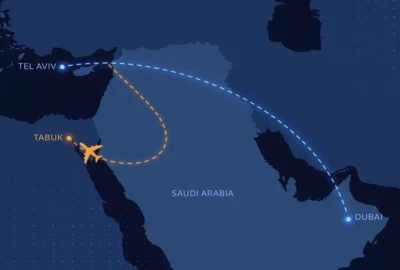
Dar also stressed repeatedly that the pact is defensive, not offensive — a framing clearly aimed at critics, including Tehran, who might read a collective-defence clause as a threat. The Flydubai cockpit-incident diversion to Tabuk earlier this month showed how quickly regional tensions can spill into aviation and civilian life, a reminder of why Islamabad wants the alliance’s rules clearly defensive.
What happens next
The Riyadh meeting is unlikely to produce visible troop movements, but three signals are worth watching:
- A joint position on the Houthi attacks — whether the alliance names concrete collective-defence measures or sticks to consultation.
- Movement on “institutionalisation” — the headquarters, the secretary general’s appointment and command structures that would turn the pact from a signed page into a working alliance.
- The membership queue — whether the six-plus interested countries get a formal application process, or are told to wait until the alliance is fully operational.
The Pakistani delegation arrives with its position set: defend Saudi Arabia, keep the pact defensive, and talk to everyone — including Iran. Whether Riyadh’s committee can turn that balancing act into a joint plan is the story to watch today.
Sources
- Reuters — Turkey says Mecca pact committee to meet in Riyadh on October 5 (Turkish foreign ministry statement)
- Geo TV — More than six nations keen on joining Makkah defence pact: DPM Dar (Dar press conference, Islamabad, 2 Oct 2026)
- The News — Over six countries express interest in joining Makkah defence pact: Dar
- Pakistan Today — Makkah defence pact committee to review regional tensions in Riyadh
- Samaa TV — At least six Muslim countries interested in joining agreement: Ishaq Dar